
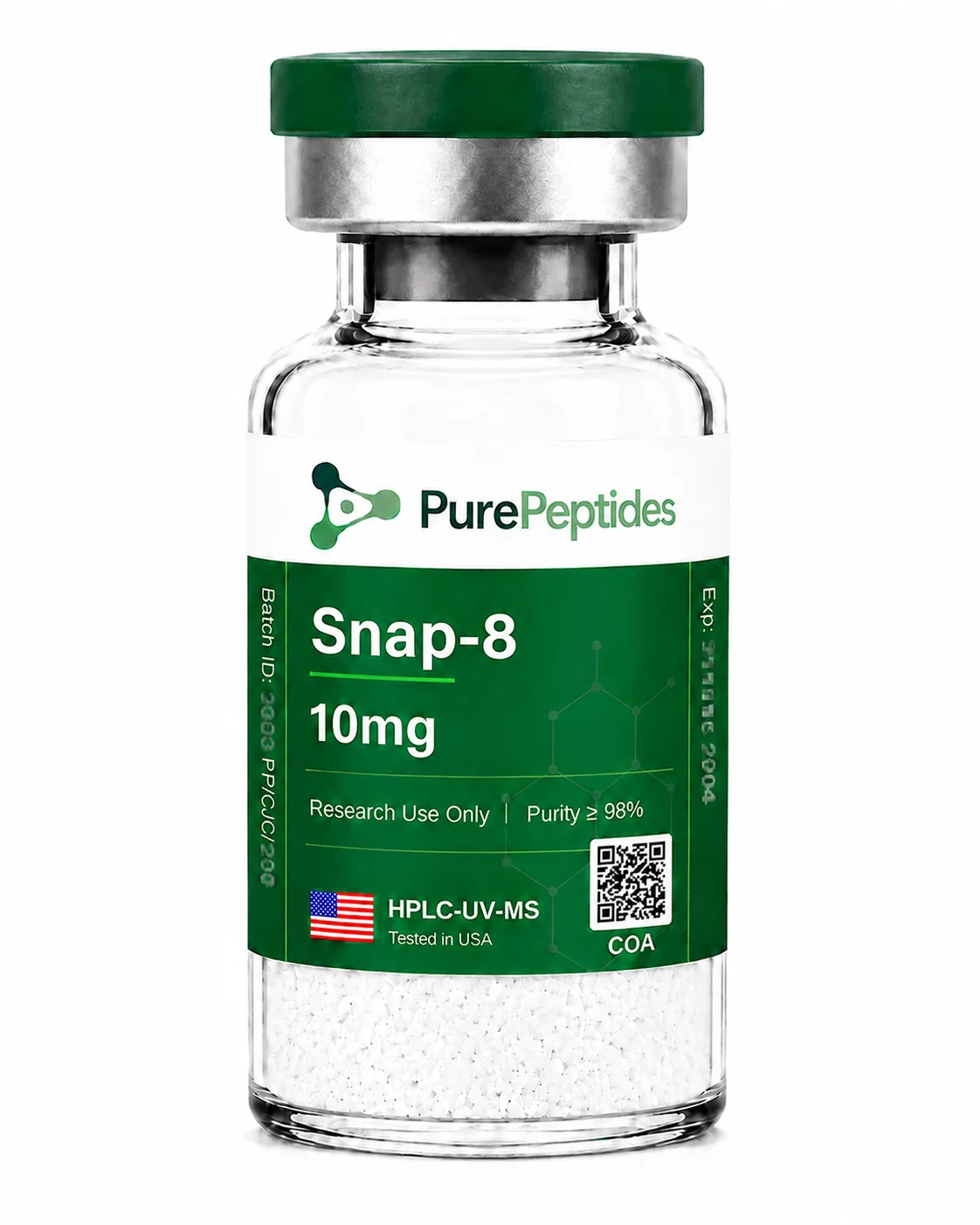
Snap-8


$32.50
Supplied as a lyophilised powder and independently verified to ≥98% purity by HPLC and MS-UPLC analysis.
1000 in stock
🔥 Exclusive Crypto Offer
Get an INSTANT 15% DISCOUNT when you pay with Bitcoin, Ethereum, Dogecoin, Bitcoin Cash, XRP, Solana, or USDT.
⚡ Don't have crypto? Buy it here in 5 minutes with easy guidance.
💡 Pro Tip: You can also pay with cryptocurrency using your verified Cash App or PayPal account for a fast and secure checkout!
What is Snap-8?
SNAP-8 is an eight-amino-acid peptide based on part of SNAP-25, a protein involved in releasing the signals that make muscles contract. It is studied in cosmetic research for its effects on this release machinery in the skin.
- An eight-amino-acid piece of SNAP-25, a protein in the muscle-signaling machinery
- Studied for how it competes with SNAP-25 at the nerve-muscle junction
- Studied in topical cosmetic research for its effects on this signaling in lab models
- Of research interest as a non-botulinum approach to nerve-muscle signaling
For research use only. Not approved for human therapeutic use.
Snap-8 (CAS 868844-74-0), also known as Acetyl Octapeptide-3, is a synthetic octapeptide with a molecular weight of 1075.16 g/mo. Defined by the amino acid sequence Ac-Glu-Glu-Met-Gln-Arg-Arg-Ala-Asp-NH2, Snap-8 is a truncated analogue of the 25-amino acid synaptosomal-associated protein SNAP-25, which forms part of the SNARE complex involved in vesicular neurotransmitter release. The acetylated N-terminus and amidated C-terminus confer resistance to exopeptidase degradation. Produced via solid-phase peptide synthesis, Acetyl Octapeptide-3 is associated with SNARE complex assembly and vesicular fusion signalling pathways in preclinical neuromuscular junction research.
Snap-8 has been investigated in preclinical neuroscience and dermatological research as a peptide designed to modulate SNARE-mediated vesicular fusion. The SNARE complex, comprising SNAP-25, syntaxin, and VAMP/synaptobrevin, mediates the calcium-dependent fusion of synaptic vesicles with the presynaptic membrane, and competitive disruption of this assembly process has been the subject of structure-activity research. In vitro studies have documented that synthetic peptides patterned after the N-terminal domain of SNAP-25 inhibit SNARE complex assembly and reduce regulated exocytosis, with inhibitory activity correlating with the peptides’ propensity to adopt an alpha-helical secondary structure [1]. Cell culture studies in neuronal and neuromuscular preparations have examined vesicular exocytosis dynamics following exposure to SNAP-25-derived peptides, documenting that the related hexapeptide Argireline, to which Snap-8 is structurally related as a longer analogue of the same SNAP-25 N-terminal sequence, inhibits Ca²⁺-dependent neurotransmitter release through interference with the formation and stability of the SNARE complex required to drive vesicular fusion [2], making Snap-8 a reference compound in neuroscience and dermatological research examining SNAP-25-derived peptide modulation of SNARE-mediated vesicular fusion in preclinical models.
Snap-8 is produced to research-grade standards and independently verified by third-party HPLC and MS-UPLC analysis before dispatch. Vials are vacuum sealed and stored in a temperature controlled, monitored cold storage system. Certificates of Analysis are available on request.
Sold strictly for in vitro research purposes only. Not for human consumption. Intended for use by qualified researchers in laboratory settings only.
References
1Blanes-Mira C, Merino JM, Valera E, Fernández-Ballester G, Gutiérrez LM, Viniegra S, et al. Small peptides patterned after the N-terminus domain of SNAP25 inhibit SNARE complex assembly and regulated exocytosis. J Neurochem. 2004 Jan;88(1):124–35. .PubMed PMID: 146751562Blanes-Mira C, Clemente J, Jodas G, Gil A, Fernández-Ballester G, Ponsati B, et al. A synthetic hexapeptide (Argireline) with antiwrinkle activity. Int J Cosmet Sci. 2002 Oct;24(5):303–10. .PubMed PMID: 18498523
Scientific Review

Dr. Martina Rossi, PhD
Scientific Contributor and Reviewer
Reviewed for scientific accuracy, 14 June 2026
View credentials →
Snap-8 (CAS 868844-74-0), also known as Acetyl Octapeptide-3, is a synthetic octapeptide with a molecular weight of 1075.16 g/mo. Defined by the amino acid sequence Ac-Glu-Glu-Met-Gln-Arg-Arg-Ala-Asp-NH2, Snap-8 is a truncated analogue of the 25-amino acid synaptosomal-associated protein SNAP-25, which forms part of the SNARE complex involved in vesicular neurotransmitter release. The acetylated N-terminus and amidated C-terminus confer resistance to exopeptidase degradation. Produced via solid-phase peptide synthesis, Acetyl Octapeptide-3 is associated with SNARE complex assembly and vesicular fusion signalling pathways in preclinical neuromuscular junction research.
Snap-8 has been investigated in preclinical neuroscience and dermatological research as a peptide designed to modulate SNARE-mediated vesicular fusion. The SNARE complex, comprising SNAP-25, syntaxin, and VAMP/synaptobrevin, mediates the calcium-dependent fusion of synaptic vesicles with the presynaptic membrane, and competitive disruption of this assembly process has been the subject of structure-activity research. In vitro studies have documented that synthetic peptides patterned after the N-terminal domain of SNAP-25 inhibit SNARE complex assembly and reduce regulated exocytosis, with inhibitory activity correlating with the peptides’ propensity to adopt an alpha-helical secondary structure [1]. Cell culture studies in neuronal and neuromuscular preparations have examined vesicular exocytosis dynamics following exposure to SNAP-25-derived peptides, documenting that the related hexapeptide Argireline, to which Snap-8 is structurally related as a longer analogue of the same SNAP-25 N-terminal sequence, inhibits Ca²⁺-dependent neurotransmitter release through interference with the formation and stability of the SNARE complex required to drive vesicular fusion [2], making Snap-8 a reference compound in neuroscience and dermatological research examining SNAP-25-derived peptide modulation of SNARE-mediated vesicular fusion in preclinical models.
Snap-8 is produced to research-grade standards and independently verified by third-party HPLC and MS-UPLC analysis before dispatch. Vials are vacuum sealed and stored in a temperature controlled, monitored cold storage system. Certificates of Analysis are available on request.
Sold strictly for in vitro research purposes only. Not for human consumption. Intended for use by qualified researchers in laboratory settings only.
References
1Blanes-Mira C, Merino JM, Valera E, Fernández-Ballester G, Gutiérrez LM, Viniegra S, et al. Small peptides patterned after the N-terminus domain of SNAP25 inhibit SNARE complex assembly and regulated exocytosis. J Neurochem. 2004 Jan;88(1):124–35. .PubMed PMID: 146751562Blanes-Mira C, Clemente J, Jodas G, Gil A, Fernández-Ballester G, Ponsati B, et al. A synthetic hexapeptide (Argireline) with antiwrinkle activity. Int J Cosmet Sci. 2002 Oct;24(5):303–10. .PubMed PMID: 18498523
Scientific Review
Dr. Martina Rossi, PhD
Scientific Contributor and Reviewer
Reviewed for scientific accuracy, 14 June 2026
View credentials →CAS Number868844-74-0Molecular Weight1,075.17 g/molPurity≥98%Physical FormLyophilised PowderManufacturingManufactured in an ISO9001 Certified LaboratoryTestingHPLC + MS-UPLCSKUSNAP8
Lyophilised powder: store at -20 °C or below, away from light and moisture. Once reconstituted in an appropriate laboratory diluent (e.g. sterile water, PBS, or assay buffer), store at 2–8 °C and use within the validated period for your protocol. Do not refreeze.
Snap-8 (CAS 868844-74-0), also known as Acetyl Octapeptide-3, is a synthetic octapeptide with a molecular weight of 1075.16 g/mo. Defined by the amino acid sequence Ac-Glu-Glu-Met-Gln-Arg-Arg-Ala-Asp-NH2, Snap-8 is a truncated analogue of the 25-amino acid synaptosomal-associated protein SNAP-25, which forms part of the SNARE complex involved in vesicular neurotransmitter release. The acetylated N-terminus and amidated C-terminus confer resistance to exopeptidase degradation. Produced via solid-phase peptide synthesis, Acetyl Octapeptide-3 is associated with SNARE complex assembly and vesicular fusion signalling pathways in preclinical neuromuscular junction research.
Snap-8 has been investigated in preclinical neuroscience and dermatological research as a peptide designed to modulate SNARE-mediated vesicular fusion. The SNARE complex, comprising SNAP-25, syntaxin, and VAMP/synaptobrevin, mediates the calcium-dependent fusion of synaptic vesicles with the presynaptic membrane, and competitive disruption of this assembly process has been the subject of structure-activity research. In vitro studies have documented that synthetic peptides patterned after the N-terminal domain of SNAP-25 inhibit SNARE complex assembly and reduce regulated exocytosis, with inhibitory activity correlating with the peptides’ propensity to adopt an alpha-helical secondary structure [1]. Cell culture studies in neuronal and neuromuscular preparations have examined vesicular exocytosis dynamics following exposure to SNAP-25-derived peptides, documenting that the related hexapeptide Argireline, to which Snap-8 is structurally related as a longer analogue of the same SNAP-25 N-terminal sequence, inhibits Ca²⁺-dependent neurotransmitter release through interference with the formation and stability of the SNARE complex required to drive vesicular fusion [2], making Snap-8 a reference compound in neuroscience and dermatological research examining SNAP-25-derived peptide modulation of SNARE-mediated vesicular fusion in preclinical models.
Snap-8 is produced to research-grade standards and independently verified by third-party HPLC and MS-UPLC analysis before dispatch. Vials are vacuum sealed and stored in a temperature controlled, monitored cold storage system. Certificates of Analysis are available on request.
Sold strictly for in vitro research purposes only. Not for human consumption. Intended for use by qualified researchers in laboratory settings only.
References
1Blanes-Mira C, Merino JM, Valera E, Fernández-Ballester G, Gutiérrez LM, Viniegra S, et al. Small peptides patterned after the N-terminus domain of SNAP25 inhibit SNARE complex assembly and regulated exocytosis. J Neurochem. 2004 Jan;88(1):124–35. .PubMed PMID: 146751562Blanes-Mira C, Clemente J, Jodas G, Gil A, Fernández-Ballester G, Ponsati B, et al. A synthetic hexapeptide (Argireline) with antiwrinkle activity. Int J Cosmet Sci. 2002 Oct;24(5):303–10. .PubMed PMID: 18498523
Scientific Review
Dr. Martina Rossi, PhD
Scientific Contributor and Reviewer
Reviewed for scientific accuracy, 14 June 2026
View credentials →CAS Number868844-74-0Molecular Weight1,075.17 g/molPurity≥98%Physical FormLyophilised PowderManufacturingManufactured in an ISO9001 Certified LaboratoryTestingHPLC + MS-UPLCSKUSNAP8
Lyophilised powder: store at -20 °C or below, away from light and moisture. Once reconstituted in an appropriate laboratory diluent (e.g. sterile water, PBS, or assay buffer), store at 2–8 °C and use within the validated period for your protocol. Do not refreeze.
Related products

GH Axis Research

GH Axis Research

GH Axis Research

GH Axis Research
GH Axis Research
GH Axis Research
GH Axis Research

GH Axis Research