
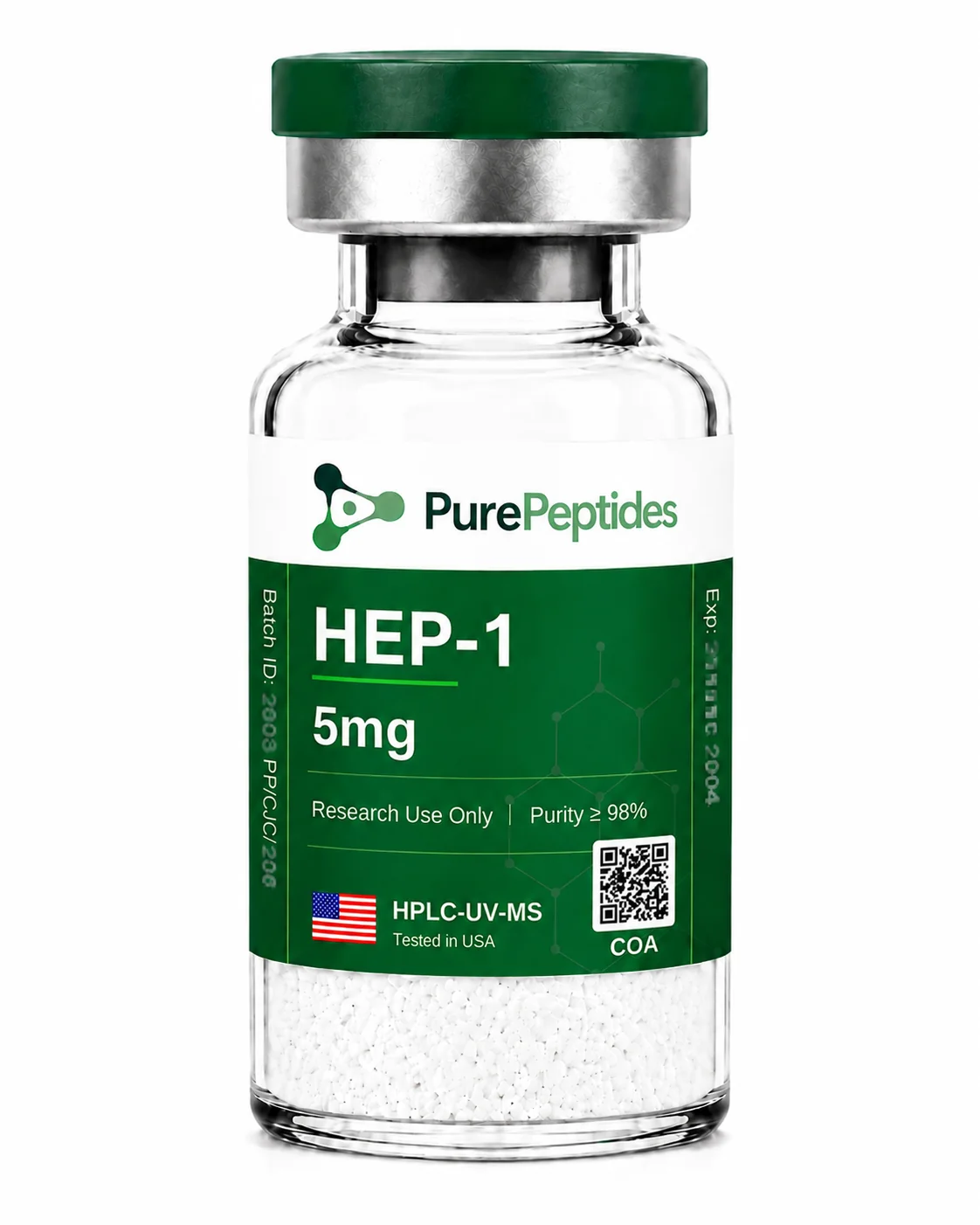
HEP-1 (Gepon)
$65.00
Supplied as a lyophilised powder and independently verified to ≥98% purity by HPLC and MS-UPLC analysis.
1000 in stock
🔥 Exclusive Crypto Offer
Get an INSTANT 15% DISCOUNT when you pay with Bitcoin, Ethereum, Dogecoin, Bitcoin Cash, XRP, Solana, or USDT.
⚡ Don't have crypto? Buy it here in 5 minutes with easy guidance.
💡 Pro Tip: You can also pay with cryptocurrency using your verified Cash App or PayPal account for a fast and secure checkout!
What is HEP-1 (Gepon)?
HEP-1 (also called Gepon) is a synthetic 10-amino-acid immune-modulating peptide developed in Russia. It acts on toll-like receptors and is studied in laboratory research for its effects on antiviral and anti-inflammatory immune signaling.
- A short synthetic peptide studied for its effects on immune-system signaling
- Studied in laboratory research for antiviral and immune signaling activity
- Investigated for anti-inflammatory effects and activity in wound-repair studies
- Works on the innate immune system through toll-like receptor signaling
For research use only. Not approved for human therapeutic use.
HEP-1, a synthetic hepcidin-derived peptide based on the Liver-Expressed Antimicrobial Peptide 1 (LEAP-1) family, is a cysteine-rich antimicrobial peptide fragment with a molecular weight of 2789.4 g/mol. Hepcidin peptides are characterised by a high cysteine content forming multiple intramolecular disulfide bridges that create a compact, hairpin-like beta-sheet structure. The full-length mature hepcidin (hepcidin-25) consists of 25 amino acids with four disulfide bonds and eight cysteine residues, and truncated bioactive fragments including hepcidin-20 have also been characterised in the published literature. Produced via solid-phase peptide synthesis, HEP-1 is associated with ferroportin-mediated iron homeostasis and innate antimicrobial signalling pathways in preclinical research.
Hepcidin peptides occupy a central position in preclinical iron metabolism and innate immunity research. The full-length peptide was first isolated from human blood ultrafiltrate and has been characterised as the principal hormonal regulator of systemic iron homeostasis, acting through direct binding and internalisation of ferroportin, the sole known cellular iron exporter. In vitro studies have documented that hepcidin binds ferroportin and induces its internalisation and degradation, reducing cellular iron export, establishing this binding-and-internalisation mechanism as the molecular basis for hepcidin’s control of cellular iron efflux [1]. In vivo rodent studies have investigated the relationship between hepcidin peptide administration and systemic iron distribution, documenting that synthetic hepcidin produces rapid, dose-dependent hypoferremia in mice and concentrates in ferroportin-containing organs, characterising the peptide as a direct regulator of systemic iron availability in vivo [2], making HEP-1 a reference compound in iron-metabolism and innate-immunity research examining hepcidin–ferroportin regulation of cellular and systemic iron handling in preclinical models.
HEP-1 is produced to research-grade standards and independently verified by third-party HPLC and MS-UPLC analysis before dispatch. Vials are vacuum sealed and stored in a temperature controlled, monitored cold storage system. Certificates of Analysis are available on request.
Sold strictly for in vitro research purposes only. Not for human consumption. Intended for use by qualified researchers in laboratory settings only.
References
1Nemeth E, Tuttle MS, Powelson J, Vaughn MB, Donovan A, Ward DM, et al. Hepcidin regulates cellular iron efflux by binding to ferroportin and inducing its internalization. Science. 2004 Dec 17;306(5704):2090–3. .PubMed PMID: 155141162Rivera S, Nemeth E, Gabayan V, Lopez MA, Farshidi D, Ganz T. Synthetic hepcidin causes rapid dose-dependent hypoferremia and is concentrated in ferroportin-containing organs. Blood. 2005 Sep 15;106(6):2196–9. ; PubMed Central PMCID: PMC1895137.PubMed PMID: 15933050
Scientific Review

Dr. Martina Rossi, PhD
Scientific Contributor and Reviewer
Reviewed for scientific accuracy, 14 June 2026
View credentials →
HEP-1, a synthetic hepcidin-derived peptide based on the Liver-Expressed Antimicrobial Peptide 1 (LEAP-1) family, is a cysteine-rich antimicrobial peptide fragment with a molecular weight of 2789.4 g/mol. Hepcidin peptides are characterised by a high cysteine content forming multiple intramolecular disulfide bridges that create a compact, hairpin-like beta-sheet structure. The full-length mature hepcidin (hepcidin-25) consists of 25 amino acids with four disulfide bonds and eight cysteine residues, and truncated bioactive fragments including hepcidin-20 have also been characterised in the published literature. Produced via solid-phase peptide synthesis, HEP-1 is associated with ferroportin-mediated iron homeostasis and innate antimicrobial signalling pathways in preclinical research.
Hepcidin peptides occupy a central position in preclinical iron metabolism and innate immunity research. The full-length peptide was first isolated from human blood ultrafiltrate and has been characterised as the principal hormonal regulator of systemic iron homeostasis, acting through direct binding and internalisation of ferroportin, the sole known cellular iron exporter. In vitro studies have documented that hepcidin binds ferroportin and induces its internalisation and degradation, reducing cellular iron export, establishing this binding-and-internalisation mechanism as the molecular basis for hepcidin’s control of cellular iron efflux [1]. In vivo rodent studies have investigated the relationship between hepcidin peptide administration and systemic iron distribution, documenting that synthetic hepcidin produces rapid, dose-dependent hypoferremia in mice and concentrates in ferroportin-containing organs, characterising the peptide as a direct regulator of systemic iron availability in vivo [2], making HEP-1 a reference compound in iron-metabolism and innate-immunity research examining hepcidin–ferroportin regulation of cellular and systemic iron handling in preclinical models.
HEP-1 is produced to research-grade standards and independently verified by third-party HPLC and MS-UPLC analysis before dispatch. Vials are vacuum sealed and stored in a temperature controlled, monitored cold storage system. Certificates of Analysis are available on request.
Sold strictly for in vitro research purposes only. Not for human consumption. Intended for use by qualified researchers in laboratory settings only.
References
1Nemeth E, Tuttle MS, Powelson J, Vaughn MB, Donovan A, Ward DM, et al. Hepcidin regulates cellular iron efflux by binding to ferroportin and inducing its internalization. Science. 2004 Dec 17;306(5704):2090–3. .PubMed PMID: 155141162Rivera S, Nemeth E, Gabayan V, Lopez MA, Farshidi D, Ganz T. Synthetic hepcidin causes rapid dose-dependent hypoferremia and is concentrated in ferroportin-containing organs. Blood. 2005 Sep 15;106(6):2196–9. ; PubMed Central PMCID: PMC1895137.PubMed PMID: 15933050
Scientific Review
Dr. Martina Rossi, PhD
Scientific Contributor and Reviewer
Reviewed for scientific accuracy, 14 June 2026
View credentials →CAS NumberN/A (novel research peptide)Molecular Weight~1,715 g/molPurity≥98%Physical FormLyophilised PowderManufacturingManufactured in an ISO9001 Certified LaboratoryTestingHPLC + MS-UPLCSKURSC-HEP1GEPON-3947
Lyophilised powder: store at -20 °C or below, away from light and moisture. Once reconstituted in an appropriate laboratory diluent (e.g. sterile water, PBS, or assay buffer), store at 2–8 °C and use within the validated period for your protocol. Do not refreeze.
HEP-1, a synthetic hepcidin-derived peptide based on the Liver-Expressed Antimicrobial Peptide 1 (LEAP-1) family, is a cysteine-rich antimicrobial peptide fragment with a molecular weight of 2789.4 g/mol. Hepcidin peptides are characterised by a high cysteine content forming multiple intramolecular disulfide bridges that create a compact, hairpin-like beta-sheet structure. The full-length mature hepcidin (hepcidin-25) consists of 25 amino acids with four disulfide bonds and eight cysteine residues, and truncated bioactive fragments including hepcidin-20 have also been characterised in the published literature. Produced via solid-phase peptide synthesis, HEP-1 is associated with ferroportin-mediated iron homeostasis and innate antimicrobial signalling pathways in preclinical research.
Hepcidin peptides occupy a central position in preclinical iron metabolism and innate immunity research. The full-length peptide was first isolated from human blood ultrafiltrate and has been characterised as the principal hormonal regulator of systemic iron homeostasis, acting through direct binding and internalisation of ferroportin, the sole known cellular iron exporter. In vitro studies have documented that hepcidin binds ferroportin and induces its internalisation and degradation, reducing cellular iron export, establishing this binding-and-internalisation mechanism as the molecular basis for hepcidin’s control of cellular iron efflux [1]. In vivo rodent studies have investigated the relationship between hepcidin peptide administration and systemic iron distribution, documenting that synthetic hepcidin produces rapid, dose-dependent hypoferremia in mice and concentrates in ferroportin-containing organs, characterising the peptide as a direct regulator of systemic iron availability in vivo [2], making HEP-1 a reference compound in iron-metabolism and innate-immunity research examining hepcidin–ferroportin regulation of cellular and systemic iron handling in preclinical models.
HEP-1 is produced to research-grade standards and independently verified by third-party HPLC and MS-UPLC analysis before dispatch. Vials are vacuum sealed and stored in a temperature controlled, monitored cold storage system. Certificates of Analysis are available on request.
Sold strictly for in vitro research purposes only. Not for human consumption. Intended for use by qualified researchers in laboratory settings only.
References
1Nemeth E, Tuttle MS, Powelson J, Vaughn MB, Donovan A, Ward DM, et al. Hepcidin regulates cellular iron efflux by binding to ferroportin and inducing its internalization. Science. 2004 Dec 17;306(5704):2090–3. .PubMed PMID: 155141162Rivera S, Nemeth E, Gabayan V, Lopez MA, Farshidi D, Ganz T. Synthetic hepcidin causes rapid dose-dependent hypoferremia and is concentrated in ferroportin-containing organs. Blood. 2005 Sep 15;106(6):2196–9. ; PubMed Central PMCID: PMC1895137.PubMed PMID: 15933050
Scientific Review
Dr. Martina Rossi, PhD
Scientific Contributor and Reviewer
Reviewed for scientific accuracy, 14 June 2026
View credentials →CAS NumberN/A (novel research peptide)Molecular Weight~1,715 g/molPurity≥98%Physical FormLyophilised PowderManufacturingManufactured in an ISO9001 Certified LaboratoryTestingHPLC + MS-UPLCSKURSC-HEP1GEPON-3947
Lyophilised powder: store at -20 °C or below, away from light and moisture. Once reconstituted in an appropriate laboratory diluent (e.g. sterile water, PBS, or assay buffer), store at 2–8 °C and use within the validated period for your protocol. Do not refreeze.
Related products
Peptide Bioregulators
Peptide Bioregulators

Peptide Bioregulators
Peptide Bioregulators
Peptide Bioregulators

Peptide Bioregulators

Peptide Bioregulators
Peptide Bioregulators