
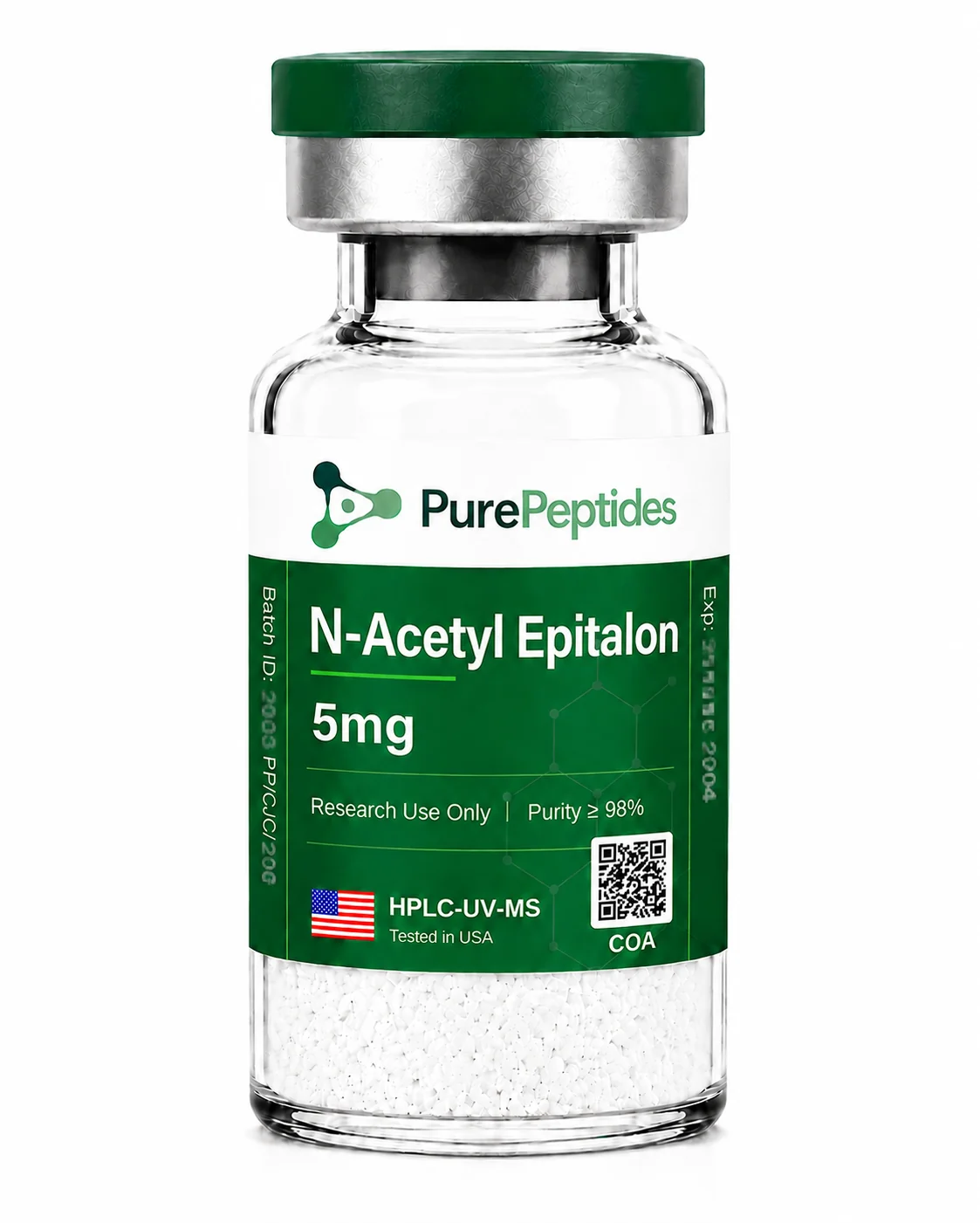
N-Acetyl Epitalon
$58.00
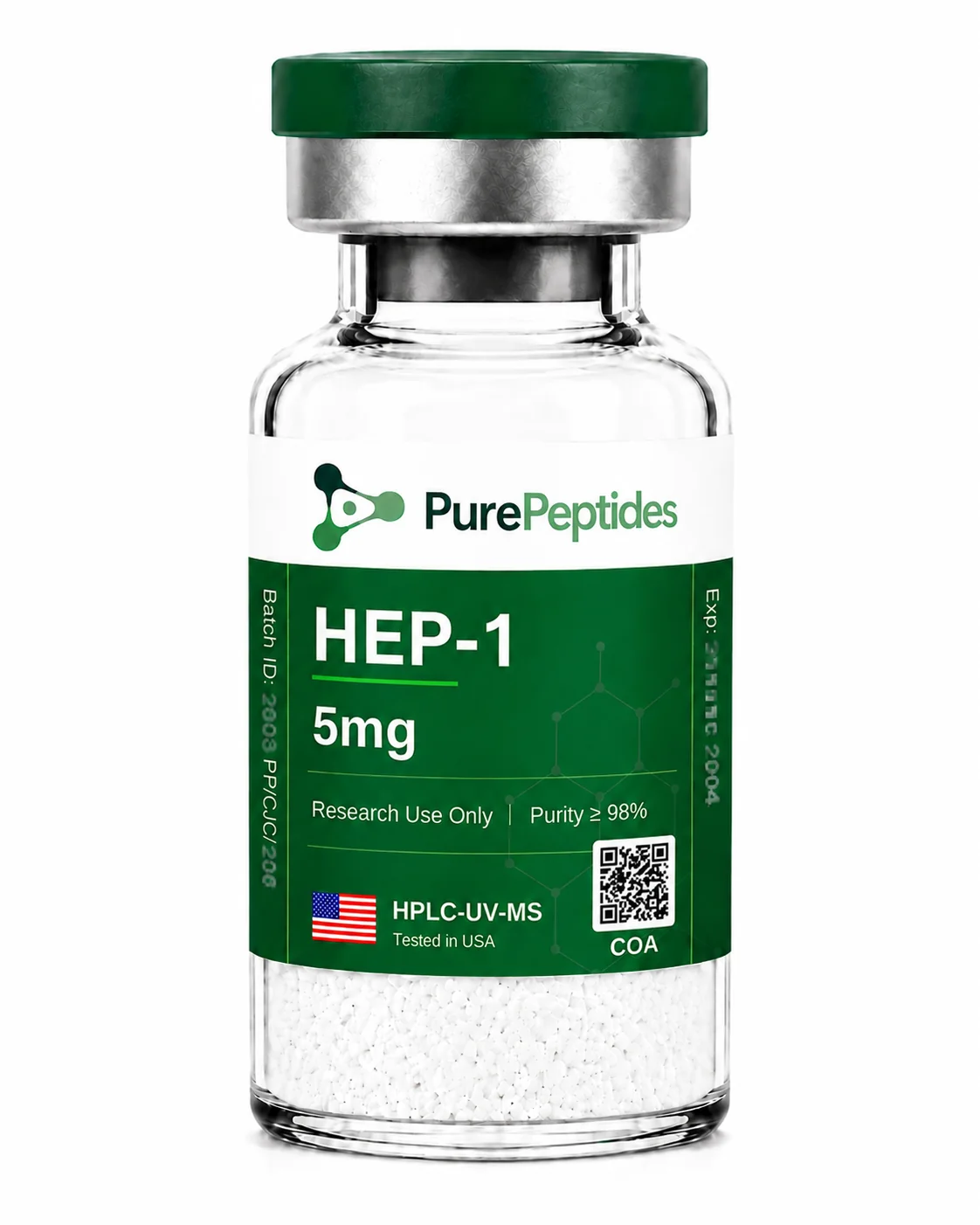
Supplied as a lyophilised powder and independently verified to ≥98% purity by HPLC and MS-UPLC analysis.
1000 in stock
🔥 Exclusive Crypto Offer
Get an INSTANT 15% DISCOUNT when you pay with Bitcoin, Ethereum, Dogecoin, Bitcoin Cash, XRP, Solana, or USDT.
⚡ Don't have crypto? Buy it here in 5 minutes with easy guidance.
💡 Pro Tip: You can also pay with cryptocurrency using your verified Cash App or PayPal account for a fast and secure checkout!
What is N-Acetyl Epitalon?
N-Acetyl Epitalon is a modified form of the peptide Epithalon with a small chemical cap added to one end, studied for making it more stable and better absorbed. Like Epithalon, it is studied in cell research for its effects on telomerase and cell aging.
- A capped version of Epitalon studied for greater resistance to breakdown
- Studied in cell research for its effects on telomerase, like the parent Epitalon
- The cap is studied for how it affects stability
- Part of the same research line into pineal-gland peptides and cell aging
For research use only. Not approved for human therapeutic use.
N-Acetyl Epitalon is a synthetic tetrapeptide and acetylated derivative of Epithalon, with an approximate molecular weight of 432 g/mol. Its structure, Ac-Ala-Glu-Asp-Gly, retains the Ala-Glu-Asp-Gly (AEDG) core sequence of the parent compound but incorporates an N-terminal acetyl group designed to confer resistance to aminopeptidase-mediated degradation. This acetylation strategy mirrors the approach used in other N-acetylated peptide derivatives such as N-Acetyl Semax, where N-terminal capping has been shown to extend circulating half-life and alter pharmacokinetic characteristics. Produced via solid-phase peptide synthesis, N-Acetyl Epitalon is associated with the same telomerase-related and pineal signalling pathways as its parent compound Epithalon.
N-Acetyl Epitalon has been investigated in preclinical research as a structurally stabilised variant of the AEDG tetrapeptide, with its N-terminal acetylation representing a deliberate modification to address the known susceptibility of short peptides to rapid enzymatic degradation. In vitro studies examining the telomerase-activating properties of the AEDG tetrapeptide core have characterised Epithalon-mediated induction of telomerase catalytic subunit expression, telomerase activity, and telomere elongation in human somatic cell preparations, establishing telomerase activation as a defined molecular output of the unmodified AEDG sequence in human cell culture models [1]. Preclinical biochemical studies have examined Epitalon (Ala-Glu-Asp-Gly) in relation to peptide-degrading enzyme systems, including its effects on enkephalin-degrading enzymes from human serum and interactions with brain membrane receptor preparations, while broader toxicology studies of biologically active peptides have evaluated their effects in mouse embryonic stem-cell models [2][3], making N-Acetyl Epitalon a key reference compound in peptide bioregulator research examining N-terminal acetylation as a stability-increasing modification in AEDG-series telomerase-activating tetrapeptides.
N-Acetyl Epitalon is produced to research-grade standards and independently verified by third-party HPLC and MS-UPLC analysis before dispatch. Vials are vacuum sealed and stored in a temperature controlled, monitored cold storage system. Certificates of Analysis are available on request.
Sold strictly for in vitro research purposes only. Not for human consumption. Intended for use by qualified researchers in laboratory settings only.
References
1Khavinson VK, Bondarev IE, Butyugov AA. Epithalon peptide induces telomerase activity and telomere elongation in human somatic cells. Bull Exp Biol Med. 2003 Jun;135(6):590–2. .PubMed PMID: 129376822Kost NV, Sokolov OI, Gabaeva MV, Zolotarev IA, Malinin VV, Khavinson VK. [Effect of new peptide bioregulators livagen and epitalon on enkephalin-degrading enzymes in human serum]. Izv Akad Nauk Ser Biol. 2003;(4):427–9. .PubMed PMID: 129427483Kobylyanskii AG, Zolotarev YuA, Andreeva LA, Grivennikov IA, Myasoedov NF. Studying the Toxic Effects of Some Biologically Active Peptides on the Model of Mouse Embryonic Stem Cells. Bull Exp Biol Med. 2017 Oct 1;163(6):731–6.doi:10.1007/s10517-017-3891-y.
Scientific Review

Dr. Martina Rossi, PhD
Scientific Contributor and Reviewer
Reviewed for scientific accuracy, 14 June 2026
View credentials →
N-Acetyl Epitalon is a synthetic tetrapeptide and acetylated derivative of Epithalon, with an approximate molecular weight of 432 g/mol. Its structure, Ac-Ala-Glu-Asp-Gly, retains the Ala-Glu-Asp-Gly (AEDG) core sequence of the parent compound but incorporates an N-terminal acetyl group designed to confer resistance to aminopeptidase-mediated degradation. This acetylation strategy mirrors the approach used in other N-acetylated peptide derivatives such as N-Acetyl Semax, where N-terminal capping has been shown to extend circulating half-life and alter pharmacokinetic characteristics. Produced via solid-phase peptide synthesis, N-Acetyl Epitalon is associated with the same telomerase-related and pineal signalling pathways as its parent compound Epithalon.
N-Acetyl Epitalon has been investigated in preclinical research as a structurally stabilised variant of the AEDG tetrapeptide, with its N-terminal acetylation representing a deliberate modification to address the known susceptibility of short peptides to rapid enzymatic degradation. In vitro studies examining the telomerase-activating properties of the AEDG tetrapeptide core have characterised Epithalon-mediated induction of telomerase catalytic subunit expression, telomerase activity, and telomere elongation in human somatic cell preparations, establishing telomerase activation as a defined molecular output of the unmodified AEDG sequence in human cell culture models [1]. Preclinical biochemical studies have examined Epitalon (Ala-Glu-Asp-Gly) in relation to peptide-degrading enzyme systems, including its effects on enkephalin-degrading enzymes from human serum and interactions with brain membrane receptor preparations, while broader toxicology studies of biologically active peptides have evaluated their effects in mouse embryonic stem-cell models [2][3], making N-Acetyl Epitalon a key reference compound in peptide bioregulator research examining N-terminal acetylation as a stability-increasing modification in AEDG-series telomerase-activating tetrapeptides.
N-Acetyl Epitalon is produced to research-grade standards and independently verified by third-party HPLC and MS-UPLC analysis before dispatch. Vials are vacuum sealed and stored in a temperature controlled, monitored cold storage system. Certificates of Analysis are available on request.
Sold strictly for in vitro research purposes only. Not for human consumption. Intended for use by qualified researchers in laboratory settings only.
References
1Khavinson VK, Bondarev IE, Butyugov AA. Epithalon peptide induces telomerase activity and telomere elongation in human somatic cells. Bull Exp Biol Med. 2003 Jun;135(6):590–2. .PubMed PMID: 129376822Kost NV, Sokolov OI, Gabaeva MV, Zolotarev IA, Malinin VV, Khavinson VK. [Effect of new peptide bioregulators livagen and epitalon on enkephalin-degrading enzymes in human serum]. Izv Akad Nauk Ser Biol. 2003;(4):427–9. .PubMed PMID: 129427483Kobylyanskii AG, Zolotarev YuA, Andreeva LA, Grivennikov IA, Myasoedov NF. Studying the Toxic Effects of Some Biologically Active Peptides on the Model of Mouse Embryonic Stem Cells. Bull Exp Biol Med. 2017 Oct 1;163(6):731–6.doi:10.1007/s10517-017-3891-y.
Scientific Review
Dr. Martina Rossi, PhD
Scientific Contributor and Reviewer
Reviewed for scientific accuracy, 14 June 2026
View credentials →CAS NumberN/A (modified Epitalon form)Molecular Weight432.38 g/molPurity≥98%Physical FormLyophilised PowderManufacturingManufactured in an ISO9001 Certified LaboratoryTestingHPLC + MS-UPLCSKURSC-NACETYLEPI-6371
Lyophilised powder: store at -20 °C or below, away from light and moisture. Once reconstituted in an appropriate laboratory diluent (e.g. sterile water, PBS, or assay buffer), store at 2–8 °C and use within the validated period for your protocol. Do not refreeze.
N-Acetyl Epitalon is a synthetic tetrapeptide and acetylated derivative of Epithalon, with an approximate molecular weight of 432 g/mol. Its structure, Ac-Ala-Glu-Asp-Gly, retains the Ala-Glu-Asp-Gly (AEDG) core sequence of the parent compound but incorporates an N-terminal acetyl group designed to confer resistance to aminopeptidase-mediated degradation. This acetylation strategy mirrors the approach used in other N-acetylated peptide derivatives such as N-Acetyl Semax, where N-terminal capping has been shown to extend circulating half-life and alter pharmacokinetic characteristics. Produced via solid-phase peptide synthesis, N-Acetyl Epitalon is associated with the same telomerase-related and pineal signalling pathways as its parent compound Epithalon.
N-Acetyl Epitalon has been investigated in preclinical research as a structurally stabilised variant of the AEDG tetrapeptide, with its N-terminal acetylation representing a deliberate modification to address the known susceptibility of short peptides to rapid enzymatic degradation. In vitro studies examining the telomerase-activating properties of the AEDG tetrapeptide core have characterised Epithalon-mediated induction of telomerase catalytic subunit expression, telomerase activity, and telomere elongation in human somatic cell preparations, establishing telomerase activation as a defined molecular output of the unmodified AEDG sequence in human cell culture models [1]. Preclinical biochemical studies have examined Epitalon (Ala-Glu-Asp-Gly) in relation to peptide-degrading enzyme systems, including its effects on enkephalin-degrading enzymes from human serum and interactions with brain membrane receptor preparations, while broader toxicology studies of biologically active peptides have evaluated their effects in mouse embryonic stem-cell models [2][3], making N-Acetyl Epitalon a key reference compound in peptide bioregulator research examining N-terminal acetylation as a stability-increasing modification in AEDG-series telomerase-activating tetrapeptides.
N-Acetyl Epitalon is produced to research-grade standards and independently verified by third-party HPLC and MS-UPLC analysis before dispatch. Vials are vacuum sealed and stored in a temperature controlled, monitored cold storage system. Certificates of Analysis are available on request.
Sold strictly for in vitro research purposes only. Not for human consumption. Intended for use by qualified researchers in laboratory settings only.
References
1Khavinson VK, Bondarev IE, Butyugov AA. Epithalon peptide induces telomerase activity and telomere elongation in human somatic cells. Bull Exp Biol Med. 2003 Jun;135(6):590–2. .PubMed PMID: 129376822Kost NV, Sokolov OI, Gabaeva MV, Zolotarev IA, Malinin VV, Khavinson VK. [Effect of new peptide bioregulators livagen and epitalon on enkephalin-degrading enzymes in human serum]. Izv Akad Nauk Ser Biol. 2003;(4):427–9. .PubMed PMID: 129427483Kobylyanskii AG, Zolotarev YuA, Andreeva LA, Grivennikov IA, Myasoedov NF. Studying the Toxic Effects of Some Biologically Active Peptides on the Model of Mouse Embryonic Stem Cells. Bull Exp Biol Med. 2017 Oct 1;163(6):731–6.doi:10.1007/s10517-017-3891-y.
Scientific Review
Dr. Martina Rossi, PhD
Scientific Contributor and Reviewer
Reviewed for scientific accuracy, 14 June 2026
View credentials →CAS NumberN/A (modified Epitalon form)Molecular Weight432.38 g/molPurity≥98%Physical FormLyophilised PowderManufacturingManufactured in an ISO9001 Certified LaboratoryTestingHPLC + MS-UPLCSKURSC-NACETYLEPI-6371
Lyophilised powder: store at -20 °C or below, away from light and moisture. Once reconstituted in an appropriate laboratory diluent (e.g. sterile water, PBS, or assay buffer), store at 2–8 °C and use within the validated period for your protocol. Do not refreeze.
Related products

Peptide Bioregulators
Peptide Bioregulators

Peptide Bioregulators

Peptide Bioregulators

Peptide Bioregulators
Peptide Bioregulators
Peptide Bioregulators
Peptide Bioregulators