
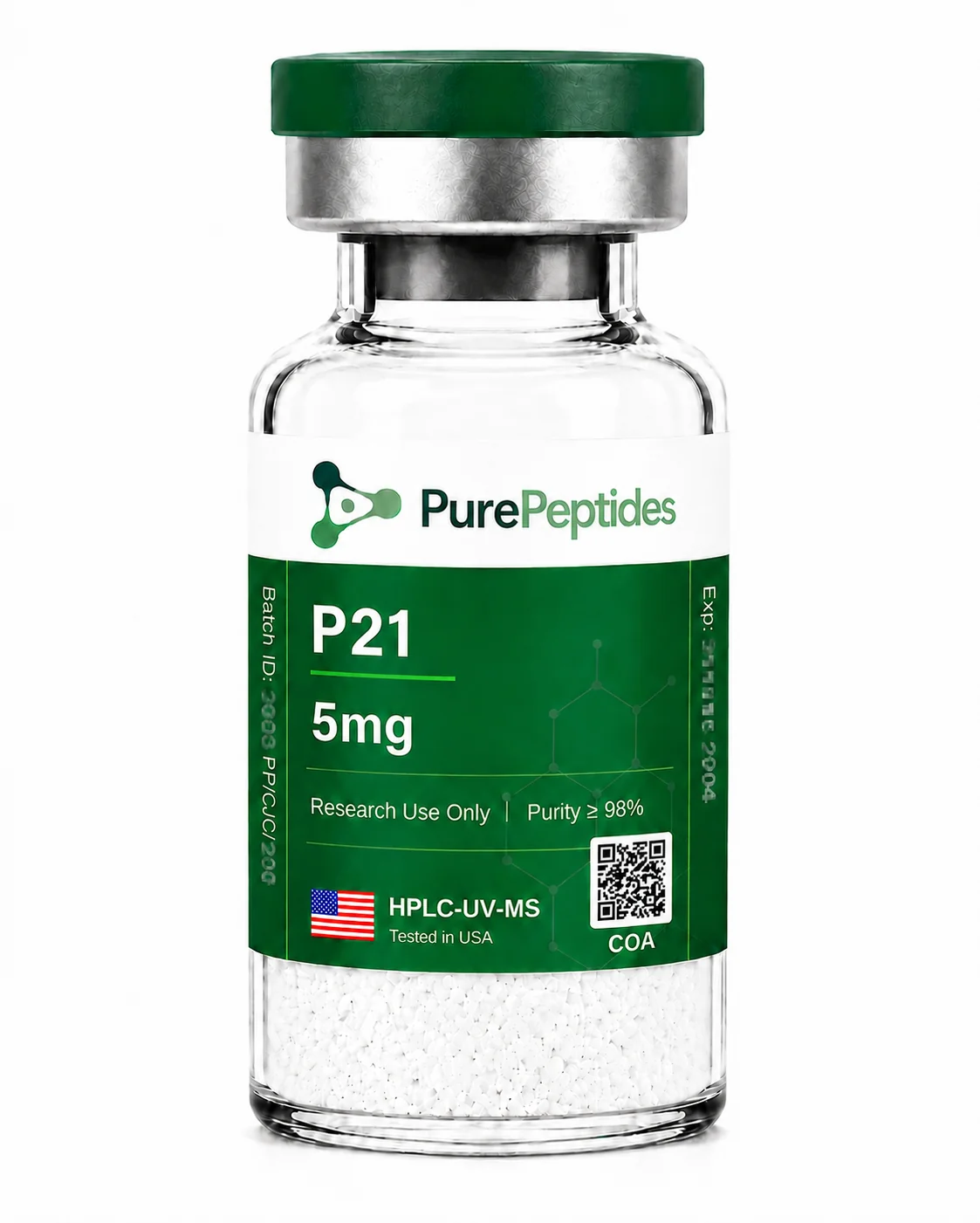
P21 (P021)
$35.00
Supplied as a lyophilised powder and independently verified to ≥98% purity by HPLC and MS-UPLC analysis.
1000 in stock
🔥 Exclusive Crypto Offer
Get an INSTANT 15% DISCOUNT when you pay with Bitcoin, Ethereum, Dogecoin, Bitcoin Cash, XRP, Solana, or USDT.
⚡ Don't have crypto? Buy it here in 5 minutes with easy guidance.
💡 Pro Tip: You can also pay with cryptocurrency using your verified Cash App or PayPal account for a fast and secure checkout!
What is P21 (P021)?
P21 (P021) is a small synthetic peptide based on a piece of the brain growth factor CNTF, modified to reach the brain better. It is studied in animal research for its effects on memory-related brain signaling and on the growth of new brain cells.
- Studied in published research for its effects on BDNF and nerve-growth signaling
- Investigated in animal models for its effects on tau, a protein tied to brain aging
- Studied for its effects on new brain-cell growth and brain-cell connections
- Small enough to reach the brain more readily than full CNTF
For research use only. Not approved for human therapeutic use.
P21 (CAS 1246751-68-7), also known as Peptide 021 or P021, is a synthetic hexapeptide derivative with the molecular formula C27H42N6O8 and a molecular weight of 578.67 g/mol. Its structure, Ac-Asp-Gly-Gly-Leu-Ala-Gly-NH2 with a C-terminal adamantane modification, was derived from the most active region of ciliary neurotrophic factor (CNTF) through epitope mapping. The acetylated N-terminus confers resistance to aminopeptidase degradation, while the adamantylated glycine at the C-terminus incorporates a rigid lipophilic tricyclic diamondoid to increase blood-brain barrier permeability and resistance to exopeptidase cleavage. Produced via solid-phase peptide synthesis, P021 is associated with BDNF expression and neurogenesis-related signalling pathways in preclinical neuroscience research.
P21 has been investigated in preclinical neuroscience as a small-molecule CNTF mimetic with a mechanism centred on modulation of the CNTF/leukemia inhibitory factor (LIF) signalling axis and the BDNF–TrkB pathway. Published research from the originating laboratory has characterised P21 as acting through inhibition of LIF signalling and increased BDNF expression, with downstream activation of the BDNF/TrkB–PI3K/Akt pathway associated with inhibitory phosphorylation of GSK3β [1]. In vivo rodent studies have examined P21 in transgenic models of Alzheimer-type pathology, with published research documenting that chronic administration of P21 in the triple-transgenic (3xTg-AD) mouse model was associated with rescue of adult hippocampal neurogenesis and synaptic-plasticity markers and reduction of tau hyperphosphorylation [2], making P021 a reference compound in preclinical neuroscience research examining CNTF-derived peptide modulation of LIF/BDNF signalling and adult hippocampal neurogenesis in rodent models.
P21 is produced to research-grade standards and independently verified by third-party HPLC and MS-UPLC analysis before dispatch. Vials are vacuum sealed and stored in a temperature controlled, monitored cold storage system. Certificates of Analysis are available on request.
Sold strictly for in vitro research purposes only. Not for human consumption. Intended for use by qualified researchers in laboratory settings only.
References
1Kazim SF, Iqbal K. Neurotrophic factor small-molecule mimetics mediated neuroregeneration and synaptic repair: emerging therapeutic modality for Alzheimer’s disease. Mol Neurodegener. 2016 Jul 11;11:50. ; PubMed Central PMCID: PMC4940708.PubMed PMID: 274007462Kazim SF, Blanchard J, Dai CL, Tung YC, LaFerla FM, Iqbal IG, et al. Disease modifying effect of chronic oral treatment with a neurotrophic peptidergic compound in a triple transgenic mouse model of Alzheimer’s disease. Neurobiology of Disease. 2014 Nov 1;71:110–30.doi:10.1016/j.nbd.2014.07.001
Scientific Review

Dr. Martina Rossi, PhD
Scientific Contributor and Reviewer
Reviewed for scientific accuracy, 14 June 2026
View credentials →
P21 (CAS 1246751-68-7), also known as Peptide 021 or P021, is a synthetic hexapeptide derivative with the molecular formula C27H42N6O8 and a molecular weight of 578.67 g/mol. Its structure, Ac-Asp-Gly-Gly-Leu-Ala-Gly-NH2 with a C-terminal adamantane modification, was derived from the most active region of ciliary neurotrophic factor (CNTF) through epitope mapping. The acetylated N-terminus confers resistance to aminopeptidase degradation, while the adamantylated glycine at the C-terminus incorporates a rigid lipophilic tricyclic diamondoid to increase blood-brain barrier permeability and resistance to exopeptidase cleavage. Produced via solid-phase peptide synthesis, P021 is associated with BDNF expression and neurogenesis-related signalling pathways in preclinical neuroscience research.
P21 has been investigated in preclinical neuroscience as a small-molecule CNTF mimetic with a mechanism centred on modulation of the CNTF/leukemia inhibitory factor (LIF) signalling axis and the BDNF–TrkB pathway. Published research from the originating laboratory has characterised P21 as acting through inhibition of LIF signalling and increased BDNF expression, with downstream activation of the BDNF/TrkB–PI3K/Akt pathway associated with inhibitory phosphorylation of GSK3β [1]. In vivo rodent studies have examined P21 in transgenic models of Alzheimer-type pathology, with published research documenting that chronic administration of P21 in the triple-transgenic (3xTg-AD) mouse model was associated with rescue of adult hippocampal neurogenesis and synaptic-plasticity markers and reduction of tau hyperphosphorylation [2], making P021 a reference compound in preclinical neuroscience research examining CNTF-derived peptide modulation of LIF/BDNF signalling and adult hippocampal neurogenesis in rodent models.
P21 is produced to research-grade standards and independently verified by third-party HPLC and MS-UPLC analysis before dispatch. Vials are vacuum sealed and stored in a temperature controlled, monitored cold storage system. Certificates of Analysis are available on request.
Sold strictly for in vitro research purposes only. Not for human consumption. Intended for use by qualified researchers in laboratory settings only.
References
1Kazim SF, Iqbal K. Neurotrophic factor small-molecule mimetics mediated neuroregeneration and synaptic repair: emerging therapeutic modality for Alzheimer’s disease. Mol Neurodegener. 2016 Jul 11;11:50. ; PubMed Central PMCID: PMC4940708.PubMed PMID: 274007462Kazim SF, Blanchard J, Dai CL, Tung YC, LaFerla FM, Iqbal IG, et al. Disease modifying effect of chronic oral treatment with a neurotrophic peptidergic compound in a triple transgenic mouse model of Alzheimer’s disease. Neurobiology of Disease. 2014 Nov 1;71:110–30.doi:10.1016/j.nbd.2014.07.001
Scientific Review
Dr. Martina Rossi, PhD
Scientific Contributor and Reviewer
Reviewed for scientific accuracy, 14 June 2026
View credentials →CAS Number1246751-68-7Molecular Weight~500–600 g/molPurity≥98%Physical FormLyophilised PowderManufacturingManufactured in an ISO9001 Certified LaboratoryTestingHPLC + MS-UPLCSKURSC-P21P021-2732
Lyophilised powder: store at -20 °C or below, away from light and moisture. Once reconstituted in an appropriate laboratory diluent (e.g. sterile water, PBS, or assay buffer), store at 2–8 °C and use within the validated period for your protocol. Do not refreeze.
P21 (CAS 1246751-68-7), also known as Peptide 021 or P021, is a synthetic hexapeptide derivative with the molecular formula C27H42N6O8 and a molecular weight of 578.67 g/mol. Its structure, Ac-Asp-Gly-Gly-Leu-Ala-Gly-NH2 with a C-terminal adamantane modification, was derived from the most active region of ciliary neurotrophic factor (CNTF) through epitope mapping. The acetylated N-terminus confers resistance to aminopeptidase degradation, while the adamantylated glycine at the C-terminus incorporates a rigid lipophilic tricyclic diamondoid to increase blood-brain barrier permeability and resistance to exopeptidase cleavage. Produced via solid-phase peptide synthesis, P021 is associated with BDNF expression and neurogenesis-related signalling pathways in preclinical neuroscience research.
P21 has been investigated in preclinical neuroscience as a small-molecule CNTF mimetic with a mechanism centred on modulation of the CNTF/leukemia inhibitory factor (LIF) signalling axis and the BDNF–TrkB pathway. Published research from the originating laboratory has characterised P21 as acting through inhibition of LIF signalling and increased BDNF expression, with downstream activation of the BDNF/TrkB–PI3K/Akt pathway associated with inhibitory phosphorylation of GSK3β [1]. In vivo rodent studies have examined P21 in transgenic models of Alzheimer-type pathology, with published research documenting that chronic administration of P21 in the triple-transgenic (3xTg-AD) mouse model was associated with rescue of adult hippocampal neurogenesis and synaptic-plasticity markers and reduction of tau hyperphosphorylation [2], making P021 a reference compound in preclinical neuroscience research examining CNTF-derived peptide modulation of LIF/BDNF signalling and adult hippocampal neurogenesis in rodent models.
P21 is produced to research-grade standards and independently verified by third-party HPLC and MS-UPLC analysis before dispatch. Vials are vacuum sealed and stored in a temperature controlled, monitored cold storage system. Certificates of Analysis are available on request.
Sold strictly for in vitro research purposes only. Not for human consumption. Intended for use by qualified researchers in laboratory settings only.
References
1Kazim SF, Iqbal K. Neurotrophic factor small-molecule mimetics mediated neuroregeneration and synaptic repair: emerging therapeutic modality for Alzheimer’s disease. Mol Neurodegener. 2016 Jul 11;11:50. ; PubMed Central PMCID: PMC4940708.PubMed PMID: 274007462Kazim SF, Blanchard J, Dai CL, Tung YC, LaFerla FM, Iqbal IG, et al. Disease modifying effect of chronic oral treatment with a neurotrophic peptidergic compound in a triple transgenic mouse model of Alzheimer’s disease. Neurobiology of Disease. 2014 Nov 1;71:110–30.doi:10.1016/j.nbd.2014.07.001
Scientific Review
Dr. Martina Rossi, PhD
Scientific Contributor and Reviewer
Reviewed for scientific accuracy, 14 June 2026
View credentials →CAS Number1246751-68-7Molecular Weight~500–600 g/molPurity≥98%Physical FormLyophilised PowderManufacturingManufactured in an ISO9001 Certified LaboratoryTestingHPLC + MS-UPLCSKURSC-P21P021-2732
Lyophilised powder: store at -20 °C or below, away from light and moisture. Once reconstituted in an appropriate laboratory diluent (e.g. sterile water, PBS, or assay buffer), store at 2–8 °C and use within the validated period for your protocol. Do not refreeze.
Related products
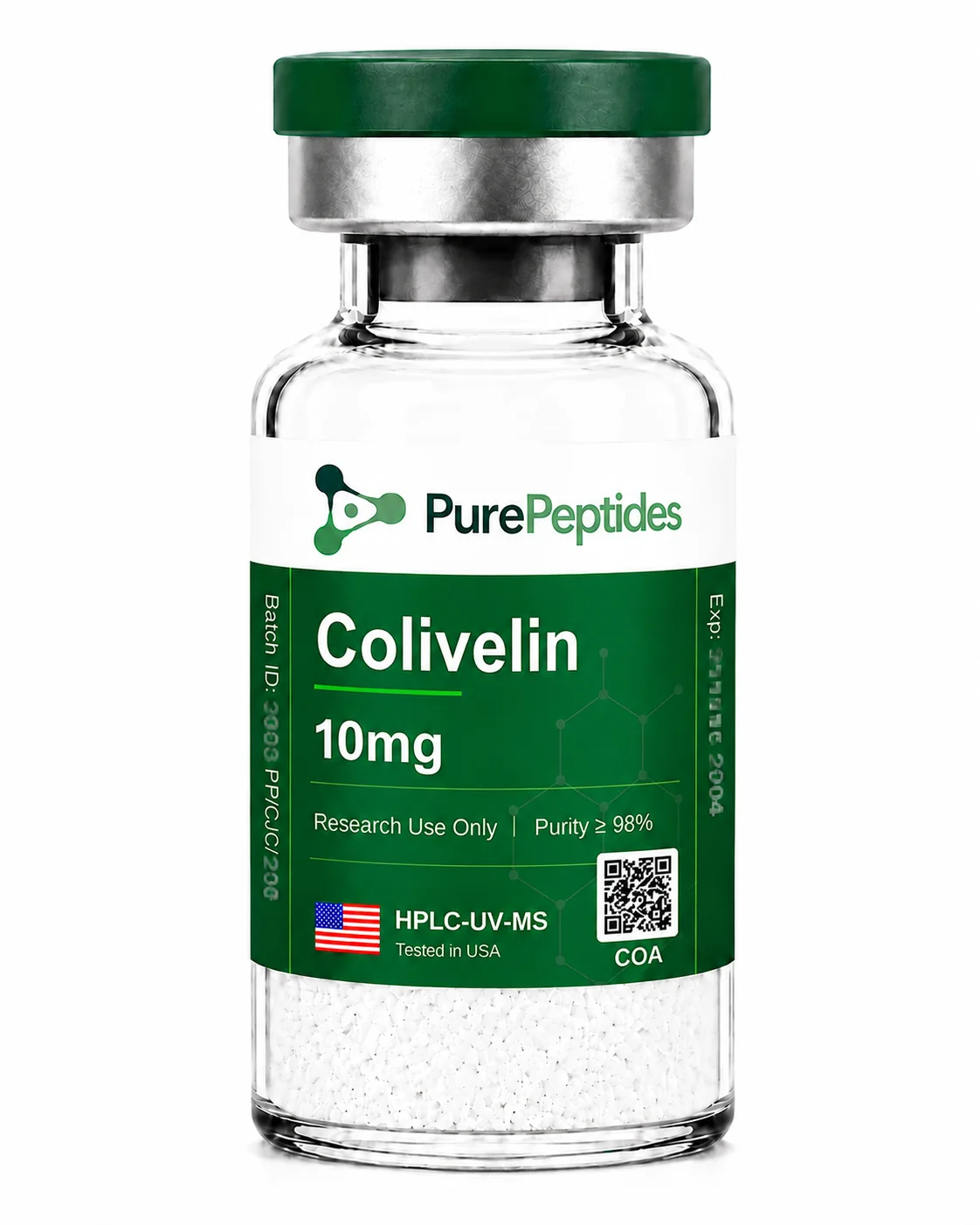
Cognitive & Neuropeptide Research

Cognitive & Neuropeptide Research
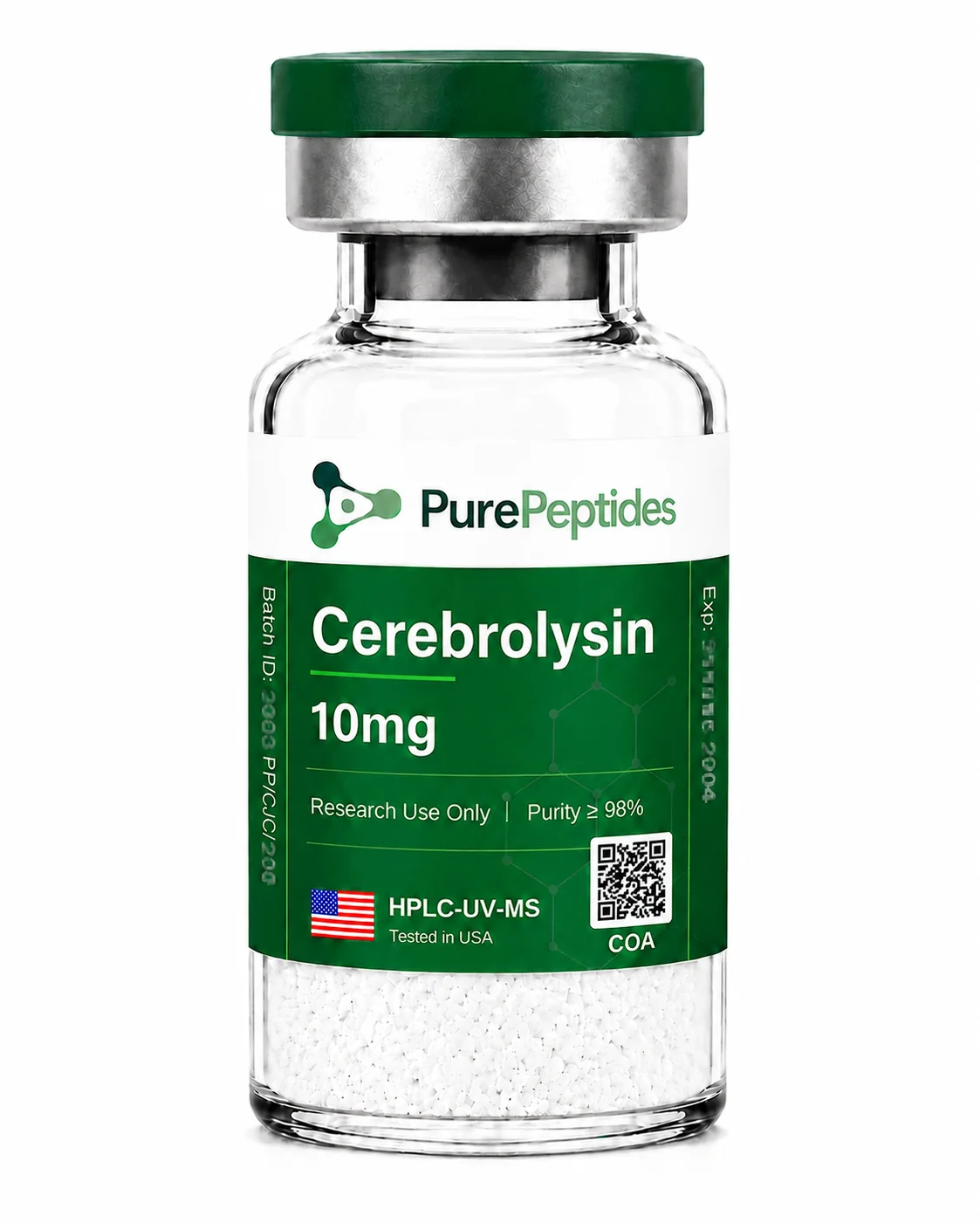
Cognitive & Neuropeptide Research
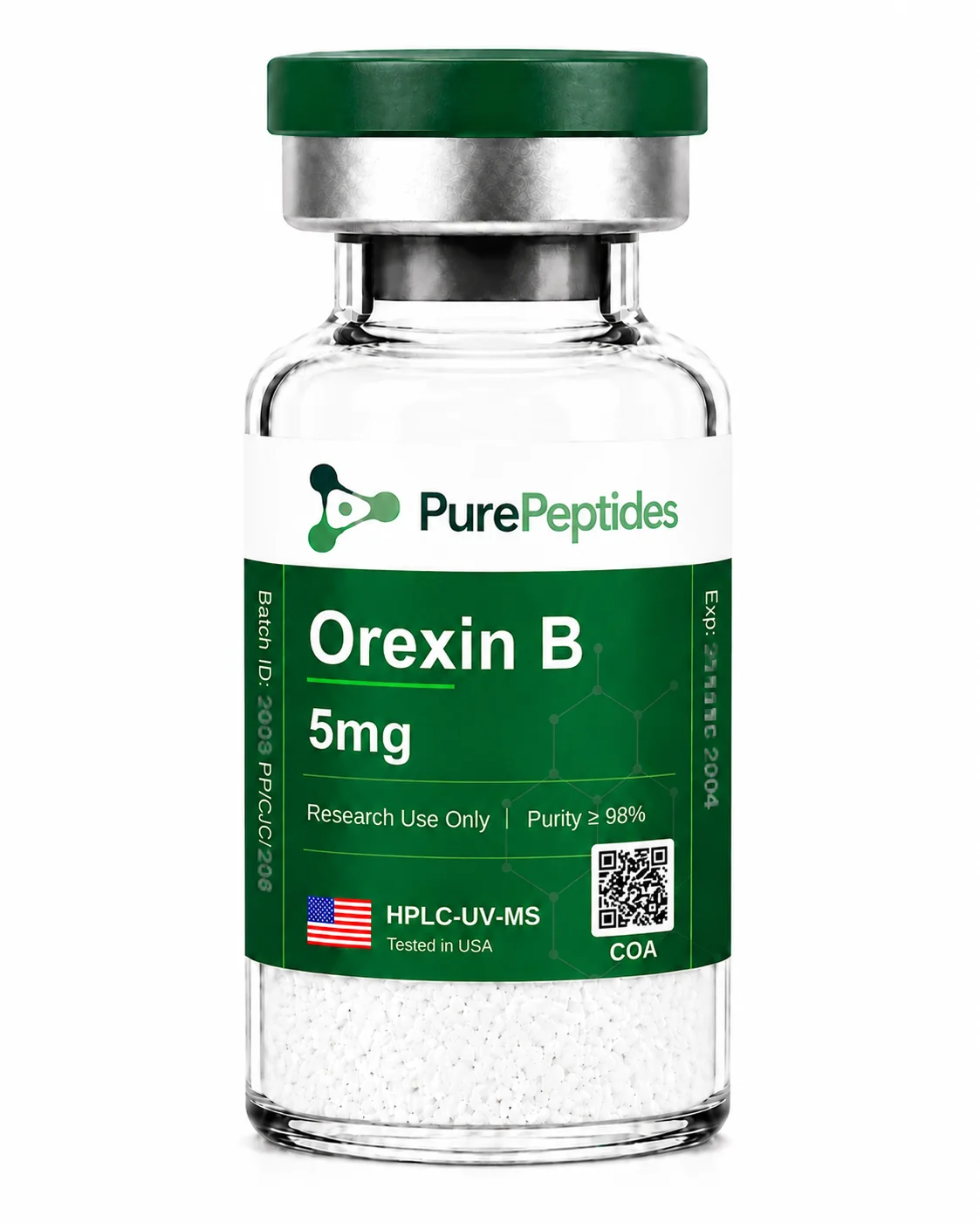
Cognitive & Neuropeptide Research
Cognitive & Neuropeptide Research

Cognitive & Neuropeptide Research

Cognitive & Neuropeptide Research
Cognitive & Neuropeptide Research