
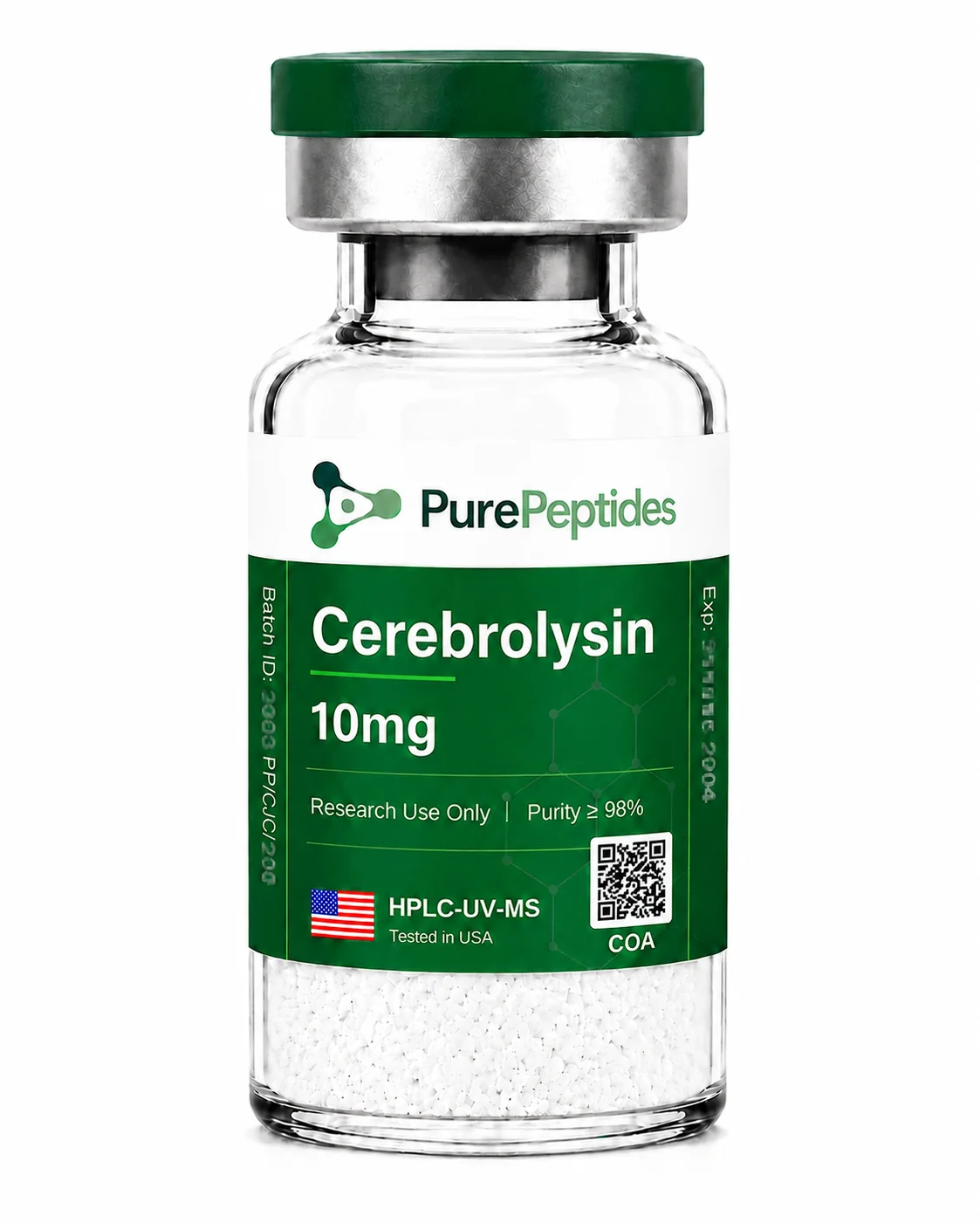
Cerebrolysin
$35.00
Supplied as a lyophilised powder and independently verified to ≥98% purity by HPLC and MS-UPLC analysis.
1000 in stock
🔥 Exclusive Crypto Offer
Get an INSTANT 15% DISCOUNT when you pay with Bitcoin, Ethereum, Dogecoin, Bitcoin Cash, XRP, Solana, or USDT.
⚡ Don't have crypto? Buy it here in 5 minutes with easy guidance.
💡 Pro Tip: You can also pay with cryptocurrency using your verified Cash App or PayPal account for a fast and secure checkout!
What is Cerebrolysin?
Cerebrolysin is a mixture of small neuropeptides and amino acids prepared from purified pig-brain proteins. It is used in laboratory and animal research as a tool for studying nerve-growth signaling and the survival of brain cells.
- A standardized mix of neuropeptides and amino acids from purified pig-brain protein
- Contains peptides studied for activity on BDNF and NGF nerve-growth signaling in cell studies
- Used in animal research as a tool compound for studying brain-cell injury and survival
- Studied in brain-injury model systems for its effects on nerve-growth signaling and cell survival
For research use only. Not approved for human therapeutic use.
Cerebrolysin is a standardised complex mixture of low-molecular-weight neuropeptides and free amino acids derived from the enzymatic proteolysis of purified porcine brain proteins. With an average molecular weight of approximately 1000 g/mol across its peptide fractions, the preparation contains a heterogeneous population of biologically active peptide fragments rather than a single defined compound. The manufacturing process employs controlled enzymatic degradation to generate reproducible peptide profiles, and the preparation is standardised by total peptide and amino acid content. Unlike the single-entity synthetic peptides in this catalogue, Cerebrolysin represents a multi-component neuropeptide preparation with a documented history in preclinical neuroscience research.
Cerebrolysin has been investigated across a broad range of preclinical neuroscience contexts. Published research has characterised the preparation as exhibiting neurotrophic-factor-like activity and multimodal signalling effects, with studies describing interactions with multiple cellular pathways involved in neuronal survival, plasticity, and repair. Published in vitro studies have examined the preparation in neuronal cell culture models, documenting that Cerebrolysin reduces glutamate-induced excitotoxic death of cultured telencephalon neurons in a concentration-dependent manner [1] and that its peptide fraction exerts antiapoptotic effects and maintains neuronal viability under cell-stress conditions in primary cortical neuron cultures [2]. In vivo rodent studies have examined the preparation in models of chronic neurological insult, documenting that Cerebrolysin increases hippocampal neurogenesis and is associated with structural and functional restoration in experimental models of brain injury and neurodegeneration [3], making Cerebrolysin a reference preparation in preclinical neuroscience research examining multimodal peptide-based neurotrophic activity, neuronal survival, and injury-associated neuroregeneration.
Cerebrolysin is produced to research-grade standards and independently verified by third-party HPLC and MS-UPLC analysis before dispatch. Vials are vacuum sealed and stored in a temperature controlled, monitored cold storage system. Certificates of Analysis are available on request.
Sold strictly for in vitro research purposes only. Not for human consumption. Intended for use by qualified researchers in laboratory settings only.
References
1Hutter-Paier B, Grygar E, Windisch M. Death of cultured telencephalon neurons induced by glutamate is reduced by the peptide derivative Cerebrolysin. J Neural Transm Suppl. 1996;47:267–73. .PubMed PMID: 88419722Hartbauer M, Hutter-Paier B, Skofitsch G, Windisch M. Antiapoptotic effects of the peptidergic drug cerebrolysin on primary cultures of embryonic chick cortical neurons. J Neural Transm (Vienna). 2001;108(4):459–73. .PubMed PMID: 114750133Rockenstein E, Mante M, Adame A, Crews L, Moessler H, Masliah E. Effects of Cerebrolysin on neurogenesis in an APP transgenic model of Alzheimer’s disease. Acta Neuropathol. 2007 Mar;113(3):265–75. .PubMed PMID: 17131129
Scientific Review

Dr. Martina Rossi, PhD
Scientific Contributor and Reviewer
Reviewed for scientific accuracy, 14 June 2026
View credentials →
Cerebrolysin is a standardised complex mixture of low-molecular-weight neuropeptides and free amino acids derived from the enzymatic proteolysis of purified porcine brain proteins. With an average molecular weight of approximately 1000 g/mol across its peptide fractions, the preparation contains a heterogeneous population of biologically active peptide fragments rather than a single defined compound. The manufacturing process employs controlled enzymatic degradation to generate reproducible peptide profiles, and the preparation is standardised by total peptide and amino acid content. Unlike the single-entity synthetic peptides in this catalogue, Cerebrolysin represents a multi-component neuropeptide preparation with a documented history in preclinical neuroscience research.
Cerebrolysin has been investigated across a broad range of preclinical neuroscience contexts. Published research has characterised the preparation as exhibiting neurotrophic-factor-like activity and multimodal signalling effects, with studies describing interactions with multiple cellular pathways involved in neuronal survival, plasticity, and repair. Published in vitro studies have examined the preparation in neuronal cell culture models, documenting that Cerebrolysin reduces glutamate-induced excitotoxic death of cultured telencephalon neurons in a concentration-dependent manner [1] and that its peptide fraction exerts antiapoptotic effects and maintains neuronal viability under cell-stress conditions in primary cortical neuron cultures [2]. In vivo rodent studies have examined the preparation in models of chronic neurological insult, documenting that Cerebrolysin increases hippocampal neurogenesis and is associated with structural and functional restoration in experimental models of brain injury and neurodegeneration [3], making Cerebrolysin a reference preparation in preclinical neuroscience research examining multimodal peptide-based neurotrophic activity, neuronal survival, and injury-associated neuroregeneration.
Cerebrolysin is produced to research-grade standards and independently verified by third-party HPLC and MS-UPLC analysis before dispatch. Vials are vacuum sealed and stored in a temperature controlled, monitored cold storage system. Certificates of Analysis are available on request.
Sold strictly for in vitro research purposes only. Not for human consumption. Intended for use by qualified researchers in laboratory settings only.
References
1Hutter-Paier B, Grygar E, Windisch M. Death of cultured telencephalon neurons induced by glutamate is reduced by the peptide derivative Cerebrolysin. J Neural Transm Suppl. 1996;47:267–73. .PubMed PMID: 88419722Hartbauer M, Hutter-Paier B, Skofitsch G, Windisch M. Antiapoptotic effects of the peptidergic drug cerebrolysin on primary cultures of embryonic chick cortical neurons. J Neural Transm (Vienna). 2001;108(4):459–73. .PubMed PMID: 114750133Rockenstein E, Mante M, Adame A, Crews L, Moessler H, Masliah E. Effects of Cerebrolysin on neurogenesis in an APP transgenic model of Alzheimer’s disease. Acta Neuropathol. 2007 Mar;113(3):265–75. .PubMed PMID: 17131129
Scientific Review
Dr. Martina Rossi, PhD
Scientific Contributor and Reviewer
Reviewed for scientific accuracy, 14 June 2026
View credentials →CAS NumberN/A (complex peptide mixture)Molecular WeightVariable; peptide fractions predominantly <10 kDaPurity≥98%Physical FormLyophilised PowderManufacturingManufactured in an ISO9001 Certified LaboratoryTestingHPLC + MS-UPLCSKUCEREB
Lyophilised powder: store at -20 °C or below, away from light and moisture. Once reconstituted in an appropriate laboratory diluent (e.g. sterile water, PBS, or assay buffer), store at 2–8 °C and use within the validated period for your protocol. Do not refreeze.
Cerebrolysin is a standardised complex mixture of low-molecular-weight neuropeptides and free amino acids derived from the enzymatic proteolysis of purified porcine brain proteins. With an average molecular weight of approximately 1000 g/mol across its peptide fractions, the preparation contains a heterogeneous population of biologically active peptide fragments rather than a single defined compound. The manufacturing process employs controlled enzymatic degradation to generate reproducible peptide profiles, and the preparation is standardised by total peptide and amino acid content. Unlike the single-entity synthetic peptides in this catalogue, Cerebrolysin represents a multi-component neuropeptide preparation with a documented history in preclinical neuroscience research.
Cerebrolysin has been investigated across a broad range of preclinical neuroscience contexts. Published research has characterised the preparation as exhibiting neurotrophic-factor-like activity and multimodal signalling effects, with studies describing interactions with multiple cellular pathways involved in neuronal survival, plasticity, and repair. Published in vitro studies have examined the preparation in neuronal cell culture models, documenting that Cerebrolysin reduces glutamate-induced excitotoxic death of cultured telencephalon neurons in a concentration-dependent manner [1] and that its peptide fraction exerts antiapoptotic effects and maintains neuronal viability under cell-stress conditions in primary cortical neuron cultures [2]. In vivo rodent studies have examined the preparation in models of chronic neurological insult, documenting that Cerebrolysin increases hippocampal neurogenesis and is associated with structural and functional restoration in experimental models of brain injury and neurodegeneration [3], making Cerebrolysin a reference preparation in preclinical neuroscience research examining multimodal peptide-based neurotrophic activity, neuronal survival, and injury-associated neuroregeneration.
Cerebrolysin is produced to research-grade standards and independently verified by third-party HPLC and MS-UPLC analysis before dispatch. Vials are vacuum sealed and stored in a temperature controlled, monitored cold storage system. Certificates of Analysis are available on request.
Sold strictly for in vitro research purposes only. Not for human consumption. Intended for use by qualified researchers in laboratory settings only.
References
1Hutter-Paier B, Grygar E, Windisch M. Death of cultured telencephalon neurons induced by glutamate is reduced by the peptide derivative Cerebrolysin. J Neural Transm Suppl. 1996;47:267–73. .PubMed PMID: 88419722Hartbauer M, Hutter-Paier B, Skofitsch G, Windisch M. Antiapoptotic effects of the peptidergic drug cerebrolysin on primary cultures of embryonic chick cortical neurons. J Neural Transm (Vienna). 2001;108(4):459–73. .PubMed PMID: 114750133Rockenstein E, Mante M, Adame A, Crews L, Moessler H, Masliah E. Effects of Cerebrolysin on neurogenesis in an APP transgenic model of Alzheimer’s disease. Acta Neuropathol. 2007 Mar;113(3):265–75. .PubMed PMID: 17131129
Scientific Review
Dr. Martina Rossi, PhD
Scientific Contributor and Reviewer
Reviewed for scientific accuracy, 14 June 2026
View credentials →CAS NumberN/A (complex peptide mixture)Molecular WeightVariable; peptide fractions predominantly <10 kDaPurity≥98%Physical FormLyophilised PowderManufacturingManufactured in an ISO9001 Certified LaboratoryTestingHPLC + MS-UPLCSKUCEREB
Lyophilised powder: store at -20 °C or below, away from light and moisture. Once reconstituted in an appropriate laboratory diluent (e.g. sterile water, PBS, or assay buffer), store at 2–8 °C and use within the validated period for your protocol. Do not refreeze.
Related products
Cognitive & Neuropeptide Research

Cognitive & Neuropeptide Research
Cognitive & Neuropeptide Research

Cognitive & Neuropeptide Research
Cognitive & Neuropeptide Research

Cognitive & Neuropeptide Research
Cognitive & Neuropeptide Research

Cognitive & Neuropeptide Research