
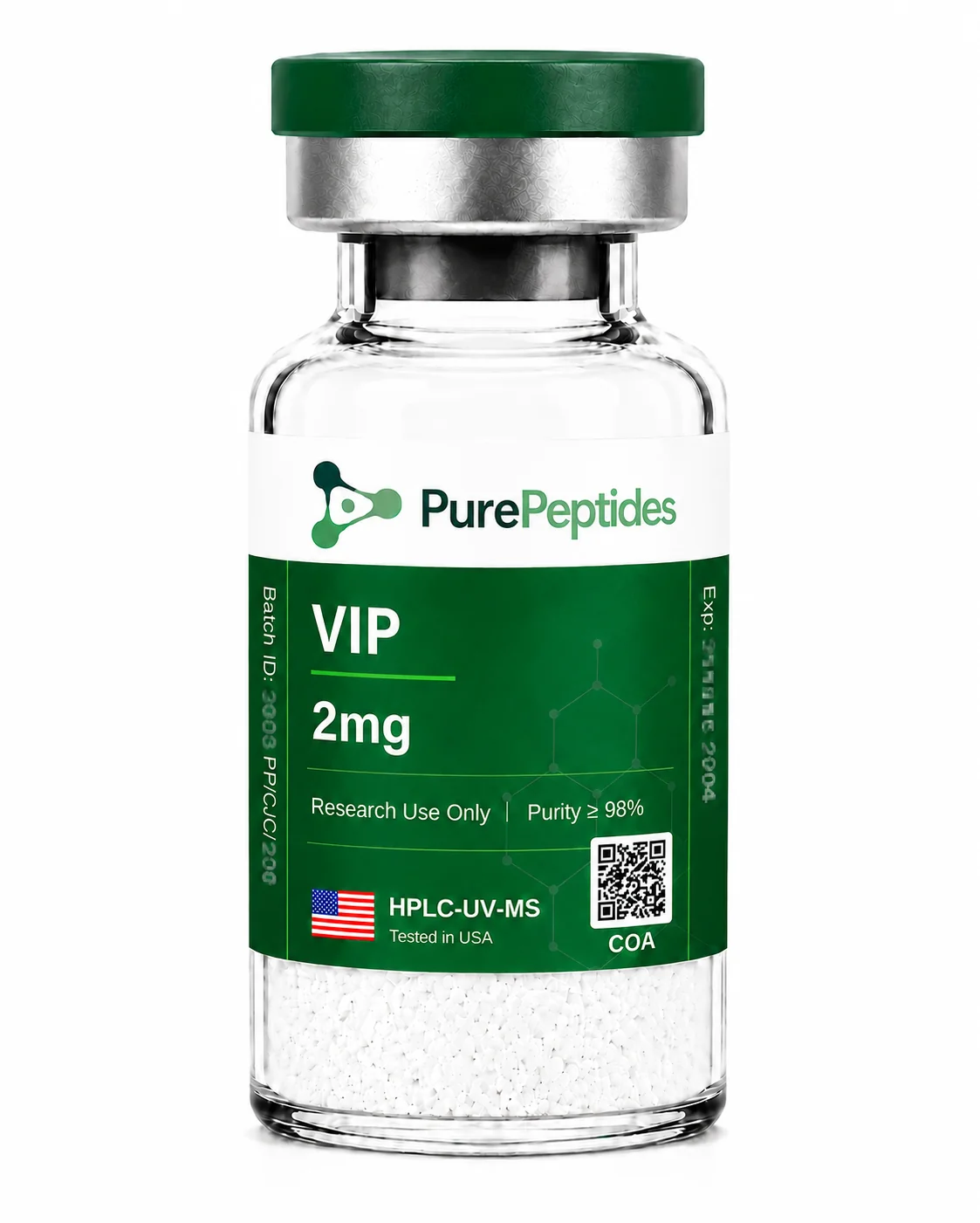
VIP (Vasoactive Intestinal Peptide)
$37.50
Supplied as a lyophilised powder and independently verified to ≥98% purity by HPLC and MS-UPLC analysis.
1000 in stock
🔥 Exclusive Crypto Offer
Get an INSTANT 15% DISCOUNT when you pay with Bitcoin, Ethereum, Dogecoin, Bitcoin Cash, XRP, Solana, or USDT.
⚡ Don't have crypto? Buy it here in 5 minutes with easy guidance.
💡 Pro Tip: You can also pay with cryptocurrency using your verified Cash App or PayPal account for a fast and secure checkout!
What is VIP (Vasoactive Intestinal Peptide)?
VIP (Vasoactive Intestinal Peptide) is a 28-amino-acid peptide found throughout the nervous system and gut. It acts on VPAC receptors and is studied in animal research for its effects on blood-vessel, immune and body-clock signaling.
- A 28-amino-acid peptide acting on VPAC1 and VPAC2 receptors
- A strong blood-vessel relaxant studied in animal lung-vessel research
- Studied for its effects on regulatory immune cells and anti-inflammatory signaling
- Investigated in animal research on body-clock and brain signaling
For research use only. Not approved for human therapeutic use.
VIP (CAS 37221-79-7), also known as Vasoactive Intestinal Polypeptide, is a synthetic 28-amino acid neuropeptide belonging to the glucagon/secretin superfamily. With the molecular formula C147H238N44O42S and a molecular weight of 3326.82 g/mol, VIP features a C-terminal amidation and no disulfide bridges in its standard form. First isolated from porcine small intestine in 1970, Vasoactive Intestinal Polypeptide signals through two class II G protein-coupled receptors, VPAC1 and VPAC2. Produced via solid-phase peptide synthesis.
VIP has been extensively investigated across an exceptionally broad range of preclinical research disciplines, reflecting the widespread distribution of VPAC receptors throughout the central nervous system, gastrointestinal tract, respiratory epithelium, and immune tissues. In vitro studies in macrophage and immune cell line preparations have examined VIP’s receptor binding characteristics and cAMP-mediated downstream signalling at VPAC1 and VPAC2, documenting VIP-mediated modulation of cytokine expression profiles (including inhibition of endotoxin-induced pro-inflammatory cytokine production) through cAMP-dependent receptor-mediated signalling cascades in immune cell preparations [1]. In vivo rodent studies have investigated VIP across circadian biology, gastrointestinal motility, and neuroimmune interaction models, with published research documenting VIP’s role in suprachiasmatic nucleus circadian rhythmicity and intercellular synchrony among SCN clock neurons, characterising VIP-VPAC2 receptor signalling as a critical mechanism for the coordination of circadian timekeeping within the suprachiasmatic nucleus under controlled preclinical conditions [2], making VIP a key reference compound in neuropeptide research examining VPAC receptor-mediated signalling across neuroimmune and circadian biology models.
VIP is produced to research-grade standards and independently verified by third-party HPLC and MS-UPLC analysis before dispatch. Vials are vacuum sealed and stored in a temperature controlled, monitored cold storage system. Certificates of Analysis are available on request.
Sold strictly for in vitro research purposes only. Not for human consumption. Intended for use by qualified researchers in laboratory settings only.
References
1Delgado M, Pozo D, Martinez C, Leceta J, Calvo JR, Ganea D, et al. Vasoactive intestinal peptide and pituitary adenylate cyclase-activating polypeptide inhibit endotoxin-induced TNF-alpha production by macrophages: in vitro and in vivo studies. J Immunol. 1999 Feb 15;162(4):2358–67. .PubMed PMID: 99735162Aton SJ, Colwell CS, Harmar AJ, Waschek J, Herzog ED. Vasoactive intestinal polypeptide mediates circadian rhythmicity and synchrony in mammalian clock neurons. Nat Neurosci. 2005 Apr;8(4):476–83. ; PubMed Central PMCID: PMC1628303.PubMed PMID: 15750589
Scientific Review

Dr. Martina Rossi, PhD
Scientific Contributor and Reviewer
Reviewed for scientific accuracy, 14 June 2026
View credentials →
VIP (CAS 37221-79-7), also known as Vasoactive Intestinal Polypeptide, is a synthetic 28-amino acid neuropeptide belonging to the glucagon/secretin superfamily. With the molecular formula C147H238N44O42S and a molecular weight of 3326.82 g/mol, VIP features a C-terminal amidation and no disulfide bridges in its standard form. First isolated from porcine small intestine in 1970, Vasoactive Intestinal Polypeptide signals through two class II G protein-coupled receptors, VPAC1 and VPAC2. Produced via solid-phase peptide synthesis.
VIP has been extensively investigated across an exceptionally broad range of preclinical research disciplines, reflecting the widespread distribution of VPAC receptors throughout the central nervous system, gastrointestinal tract, respiratory epithelium, and immune tissues. In vitro studies in macrophage and immune cell line preparations have examined VIP’s receptor binding characteristics and cAMP-mediated downstream signalling at VPAC1 and VPAC2, documenting VIP-mediated modulation of cytokine expression profiles (including inhibition of endotoxin-induced pro-inflammatory cytokine production) through cAMP-dependent receptor-mediated signalling cascades in immune cell preparations [1]. In vivo rodent studies have investigated VIP across circadian biology, gastrointestinal motility, and neuroimmune interaction models, with published research documenting VIP’s role in suprachiasmatic nucleus circadian rhythmicity and intercellular synchrony among SCN clock neurons, characterising VIP-VPAC2 receptor signalling as a critical mechanism for the coordination of circadian timekeeping within the suprachiasmatic nucleus under controlled preclinical conditions [2], making VIP a key reference compound in neuropeptide research examining VPAC receptor-mediated signalling across neuroimmune and circadian biology models.
VIP is produced to research-grade standards and independently verified by third-party HPLC and MS-UPLC analysis before dispatch. Vials are vacuum sealed and stored in a temperature controlled, monitored cold storage system. Certificates of Analysis are available on request.
Sold strictly for in vitro research purposes only. Not for human consumption. Intended for use by qualified researchers in laboratory settings only.
References
1Delgado M, Pozo D, Martinez C, Leceta J, Calvo JR, Ganea D, et al. Vasoactive intestinal peptide and pituitary adenylate cyclase-activating polypeptide inhibit endotoxin-induced TNF-alpha production by macrophages: in vitro and in vivo studies. J Immunol. 1999 Feb 15;162(4):2358–67. .PubMed PMID: 99735162Aton SJ, Colwell CS, Harmar AJ, Waschek J, Herzog ED. Vasoactive intestinal polypeptide mediates circadian rhythmicity and synchrony in mammalian clock neurons. Nat Neurosci. 2005 Apr;8(4):476–83. ; PubMed Central PMCID: PMC1628303.PubMed PMID: 15750589
Scientific Review
Dr. Martina Rossi, PhD
Scientific Contributor and Reviewer
Reviewed for scientific accuracy, 14 June 2026
View credentials →CAS Number37221-79-7Molecular Weight3,326.83 g/molPurity≥98%Physical FormLyophilised PowderManufacturingManufactured in an ISO9001 Certified LaboratoryTestingHPLC + MS-UPLCSKUVIP
Lyophilised powder: store at -20 °C or below, away from light and moisture. Once reconstituted in an appropriate laboratory diluent (e.g. sterile water, PBS, or assay buffer), store at 2–8 °C and use within the validated period for your protocol. Do not refreeze.
VIP (CAS 37221-79-7), also known as Vasoactive Intestinal Polypeptide, is a synthetic 28-amino acid neuropeptide belonging to the glucagon/secretin superfamily. With the molecular formula C147H238N44O42S and a molecular weight of 3326.82 g/mol, VIP features a C-terminal amidation and no disulfide bridges in its standard form. First isolated from porcine small intestine in 1970, Vasoactive Intestinal Polypeptide signals through two class II G protein-coupled receptors, VPAC1 and VPAC2. Produced via solid-phase peptide synthesis.
VIP has been extensively investigated across an exceptionally broad range of preclinical research disciplines, reflecting the widespread distribution of VPAC receptors throughout the central nervous system, gastrointestinal tract, respiratory epithelium, and immune tissues. In vitro studies in macrophage and immune cell line preparations have examined VIP’s receptor binding characteristics and cAMP-mediated downstream signalling at VPAC1 and VPAC2, documenting VIP-mediated modulation of cytokine expression profiles (including inhibition of endotoxin-induced pro-inflammatory cytokine production) through cAMP-dependent receptor-mediated signalling cascades in immune cell preparations [1]. In vivo rodent studies have investigated VIP across circadian biology, gastrointestinal motility, and neuroimmune interaction models, with published research documenting VIP’s role in suprachiasmatic nucleus circadian rhythmicity and intercellular synchrony among SCN clock neurons, characterising VIP-VPAC2 receptor signalling as a critical mechanism for the coordination of circadian timekeeping within the suprachiasmatic nucleus under controlled preclinical conditions [2], making VIP a key reference compound in neuropeptide research examining VPAC receptor-mediated signalling across neuroimmune and circadian biology models.
VIP is produced to research-grade standards and independently verified by third-party HPLC and MS-UPLC analysis before dispatch. Vials are vacuum sealed and stored in a temperature controlled, monitored cold storage system. Certificates of Analysis are available on request.
Sold strictly for in vitro research purposes only. Not for human consumption. Intended for use by qualified researchers in laboratory settings only.
References
1Delgado M, Pozo D, Martinez C, Leceta J, Calvo JR, Ganea D, et al. Vasoactive intestinal peptide and pituitary adenylate cyclase-activating polypeptide inhibit endotoxin-induced TNF-alpha production by macrophages: in vitro and in vivo studies. J Immunol. 1999 Feb 15;162(4):2358–67. .PubMed PMID: 99735162Aton SJ, Colwell CS, Harmar AJ, Waschek J, Herzog ED. Vasoactive intestinal polypeptide mediates circadian rhythmicity and synchrony in mammalian clock neurons. Nat Neurosci. 2005 Apr;8(4):476–83. ; PubMed Central PMCID: PMC1628303.PubMed PMID: 15750589
Scientific Review
Dr. Martina Rossi, PhD
Scientific Contributor and Reviewer
Reviewed for scientific accuracy, 14 June 2026
View credentials →CAS Number37221-79-7Molecular Weight3,326.83 g/molPurity≥98%Physical FormLyophilised PowderManufacturingManufactured in an ISO9001 Certified LaboratoryTestingHPLC + MS-UPLCSKUVIP
Lyophilised powder: store at -20 °C or below, away from light and moisture. Once reconstituted in an appropriate laboratory diluent (e.g. sterile water, PBS, or assay buffer), store at 2–8 °C and use within the validated period for your protocol. Do not refreeze.
Related products
Regeneration Research
Regeneration Research
Regeneration Research
Regeneration Research
Regeneration Research
Regeneration Research
Regeneration Research
Regeneration Research