
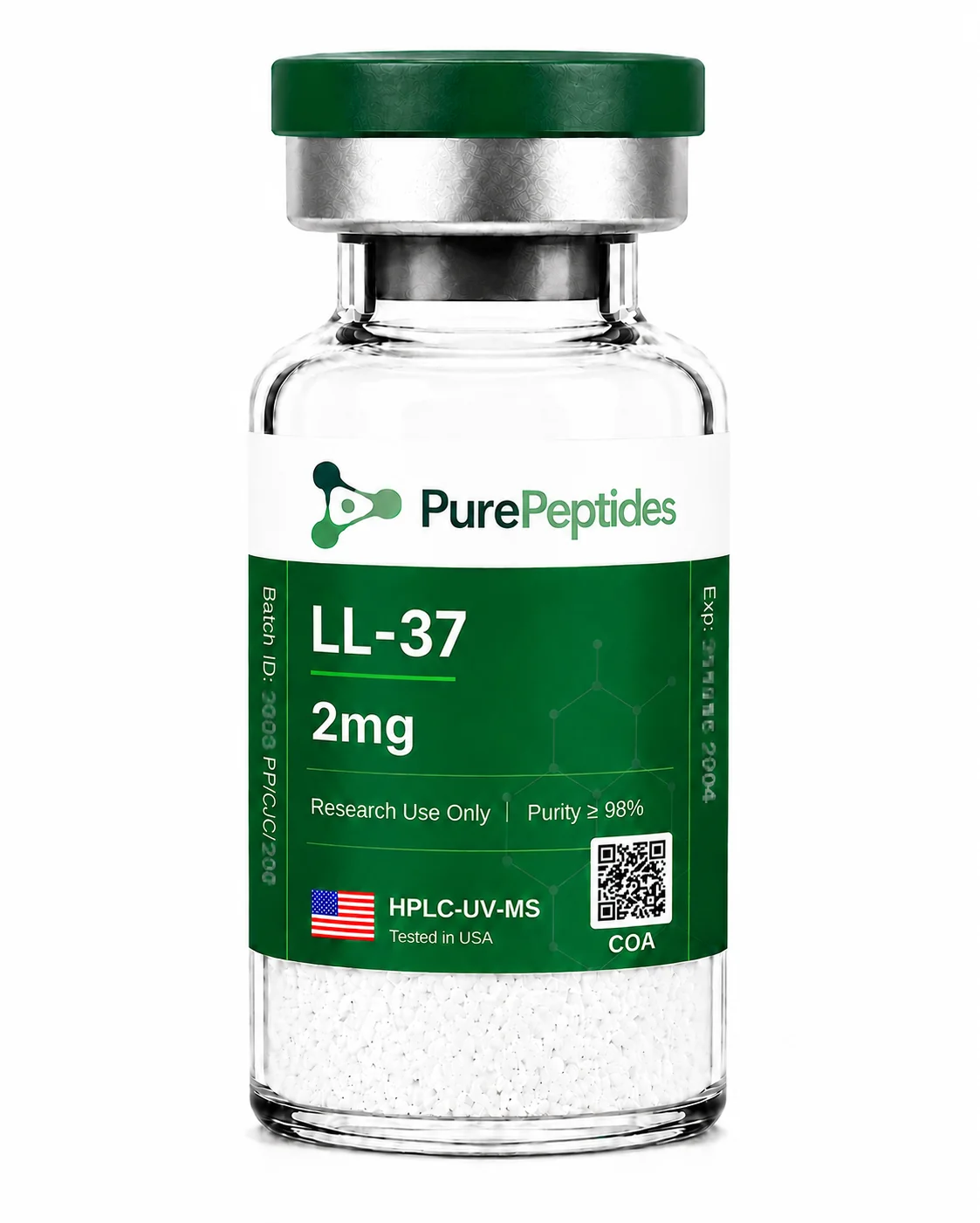
LL-37
$59.00
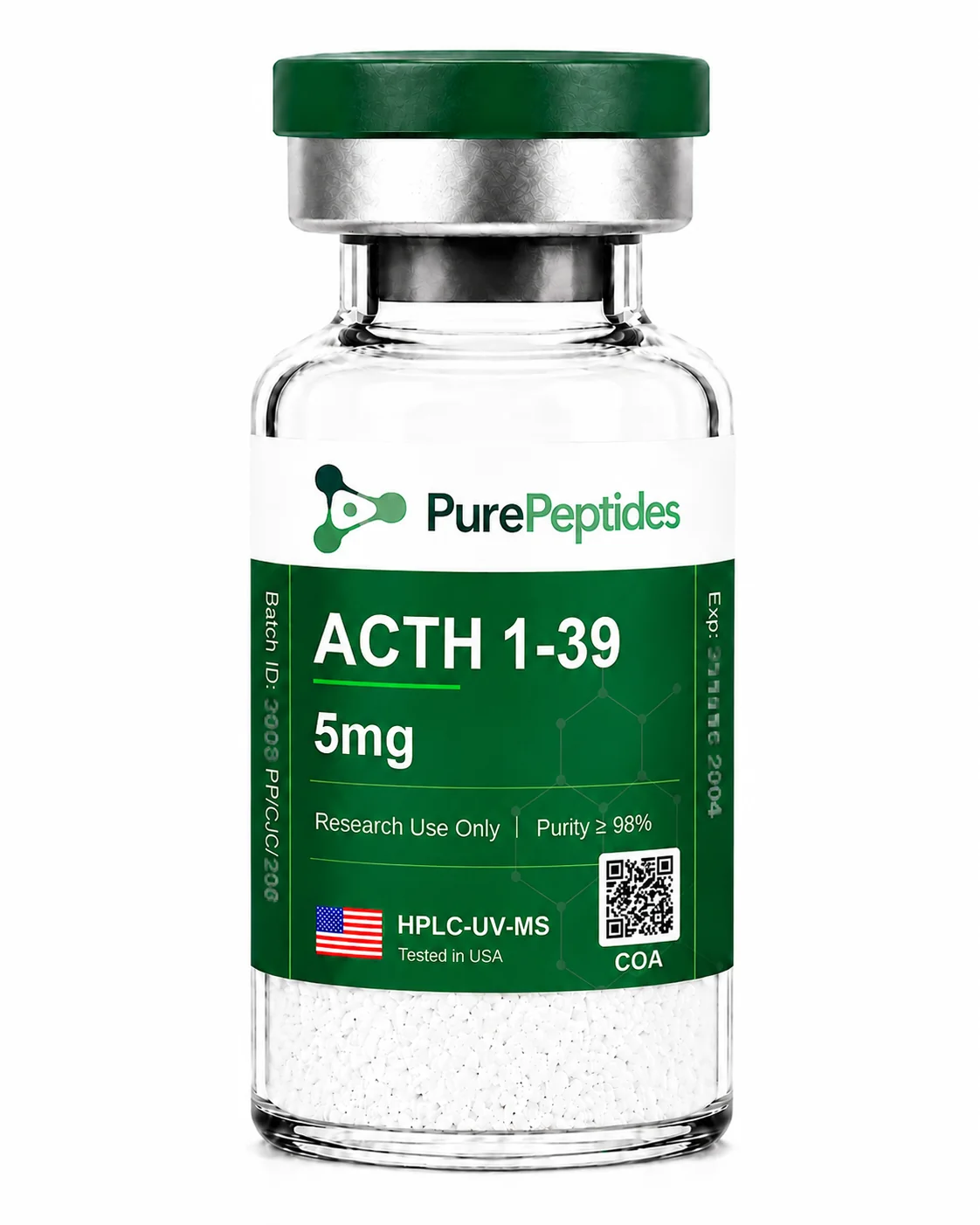
Supplied as a lyophilised powder and independently verified to ≥98% purity by HPLC and MS-UPLC analysis.
1000 in stock
🔥 Exclusive Crypto Offer
Get an INSTANT 15% DISCOUNT when you pay with Bitcoin, Ethereum, Dogecoin, Bitcoin Cash, XRP, Solana, or USDT.
⚡ Don't have crypto? Buy it here in 5 minutes with easy guidance.
💡 Pro Tip: You can also pay with cryptocurrency using your verified Cash App or PayPal account for a fast and secure checkout!
What is LL-37?
LL-37 is the body’s only peptide of its kind (a cathelicidin), made by skin, immune and lining cells as part of natural defense. It is studied in laboratory research for its antimicrobial activity and its effects on immune signaling and wound repair.
- The only antimicrobial peptide of its class made naturally by the human body
- Released by immune and skin cells as part of first-line defense against microbes
- Studied for broad antimicrobial activity and breaking up bacterial biofilms
- Investigated in wound-repair studies and for its effects on immune-cell signaling
For research use only. Not approved for human therapeutic use.
LL-37 (CAS 154947-66-7) is a synthetic 37-amino acid peptide and the sole cathelicidin-derived antimicrobial peptide identified in humans. With a molecular weight of 4493.33 g/mol, LL-37 is defined by the amino acid sequence LLGDFFRKSKEKIGKEFKRIVQRIKDFLRNLVPRTES, a highly cationic, amphipathic alpha-helical peptide derived from the C-terminal cleavage of the 18 kDa precursor protein hCAP-18. Its name reflects the two leucine residues at the N-terminus and its 37-residue length. The amphipathic structure with clustered cationic and hydrophobic faces along the alpha-helix is considered central to its membrane interaction characteristics. Produced via solid-phase peptide synthesis.
LL-37’s amphipathic alpha-helical structure has been characterised as central to its interaction with microbial membranes, and this membrane-active property has been the focus of extensive biophysical and microbiological investigation. In vitro studies have examined its interaction with bacterial membrane model systems, documenting that LL-37 adopts a surface-parallel orientation in oriented lipid bilayers and disrupts the membrane through a toroidal-pore mechanism, with this surface orientation maintained across both anionic and zwitterionic bilayer compositions [1]. Published research characterising LL-37 as a chemoattractant for human neutrophils, monocytes and T cells acting through formyl peptide receptor-like 1 (FPRL1), and documenting calcium mobilisation in FPRL1-transfected cells as evidence of the receptor mediating LL-37’s chemotactic signalling [2], and with in vivo wound-model research documenting that LL-37 accelerates re-epithelialisation and wound closure in a humanised skin wound-healing model engrafted on immunodeficient mice [3], making LL-37 a reference compound in innate-immunity and antimicrobial-peptide research examining membrane-active host defence peptide mechanisms and FPRL1-mediated immunomodulatory signalling in preclinical models.
LL-37 is produced to research-grade standards and independently verified by third-party HPLC and MS-UPLC analysis before dispatch. Vials are vacuum sealed and stored in a temperature controlled, monitored cold storage system. Certificates of Analysis are available on request.
Sold strictly for in vitro research purposes only. Not for human consumption. Intended for use by qualified researchers in laboratory settings only.
References
1Henzler Wildman KA, Lee DK, Ramamoorthy A. Mechanism of lipid bilayer disruption by the human antimicrobial peptide, LL-37. Biochemistry. 2003 Jun 3;42(21):6545–58. .PubMed PMID: 127672382Yang D, Chen Q, Schmidt AP, Anderson GM, Wang JM, Wooters J, et al. LL-37, the neutrophil granule- and epithelial cell-derived cathelicidin, utilizes formyl peptide receptor-like 1 (FPRL1) as a receptor to chemoattract human peripheral blood neutrophils, monocytes, and T cells. J Exp Med. 2000 Oct 2;192(7):1069–74. ; PubMed Central PMCID: PMC2193321.PubMed PMID: 110154473Carretero M, Escámez MJ, García M, Duarte B, Holguín A, Retamosa L, et al. In vitro and in vivo wound healing-promoting activities of human cathelicidin LL-37. J Invest Dermatol. 2008 Jan;128(1):223–36. .PubMed PMID: 17805349
Scientific Review

Dr. Martina Rossi, PhD
Scientific Contributor and Reviewer
Reviewed for scientific accuracy, 14 June 2026
View credentials →
LL-37 (CAS 154947-66-7) is a synthetic 37-amino acid peptide and the sole cathelicidin-derived antimicrobial peptide identified in humans. With a molecular weight of 4493.33 g/mol, LL-37 is defined by the amino acid sequence LLGDFFRKSKEKIGKEFKRIVQRIKDFLRNLVPRTES, a highly cationic, amphipathic alpha-helical peptide derived from the C-terminal cleavage of the 18 kDa precursor protein hCAP-18. Its name reflects the two leucine residues at the N-terminus and its 37-residue length. The amphipathic structure with clustered cationic and hydrophobic faces along the alpha-helix is considered central to its membrane interaction characteristics. Produced via solid-phase peptide synthesis.
LL-37’s amphipathic alpha-helical structure has been characterised as central to its interaction with microbial membranes, and this membrane-active property has been the focus of extensive biophysical and microbiological investigation. In vitro studies have examined its interaction with bacterial membrane model systems, documenting that LL-37 adopts a surface-parallel orientation in oriented lipid bilayers and disrupts the membrane through a toroidal-pore mechanism, with this surface orientation maintained across both anionic and zwitterionic bilayer compositions [1]. Published research characterising LL-37 as a chemoattractant for human neutrophils, monocytes and T cells acting through formyl peptide receptor-like 1 (FPRL1), and documenting calcium mobilisation in FPRL1-transfected cells as evidence of the receptor mediating LL-37’s chemotactic signalling [2], and with in vivo wound-model research documenting that LL-37 accelerates re-epithelialisation and wound closure in a humanised skin wound-healing model engrafted on immunodeficient mice [3], making LL-37 a reference compound in innate-immunity and antimicrobial-peptide research examining membrane-active host defence peptide mechanisms and FPRL1-mediated immunomodulatory signalling in preclinical models.
LL-37 is produced to research-grade standards and independently verified by third-party HPLC and MS-UPLC analysis before dispatch. Vials are vacuum sealed and stored in a temperature controlled, monitored cold storage system. Certificates of Analysis are available on request.
Sold strictly for in vitro research purposes only. Not for human consumption. Intended for use by qualified researchers in laboratory settings only.
References
1Henzler Wildman KA, Lee DK, Ramamoorthy A. Mechanism of lipid bilayer disruption by the human antimicrobial peptide, LL-37. Biochemistry. 2003 Jun 3;42(21):6545–58. .PubMed PMID: 127672382Yang D, Chen Q, Schmidt AP, Anderson GM, Wang JM, Wooters J, et al. LL-37, the neutrophil granule- and epithelial cell-derived cathelicidin, utilizes formyl peptide receptor-like 1 (FPRL1) as a receptor to chemoattract human peripheral blood neutrophils, monocytes, and T cells. J Exp Med. 2000 Oct 2;192(7):1069–74. ; PubMed Central PMCID: PMC2193321.PubMed PMID: 110154473Carretero M, Escámez MJ, García M, Duarte B, Holguín A, Retamosa L, et al. In vitro and in vivo wound healing-promoting activities of human cathelicidin LL-37. J Invest Dermatol. 2008 Jan;128(1):223–36. .PubMed PMID: 17805349
Scientific Review
Dr. Martina Rossi, PhD
Scientific Contributor and Reviewer
Reviewed for scientific accuracy, 14 June 2026
View credentials →CAS Number154947-66-7Molecular Weight4,493.34 g/molPurity≥98%Physical FormLyophilised PowderManufacturingManufactured in an ISO9001 Certified LaboratoryTestingHPLC + MS-UPLCSKULL37
Lyophilised powder: store at -20 °C or below, away from light and moisture. Once reconstituted in an appropriate laboratory diluent (e.g. sterile water, PBS, or assay buffer), store at 2–8 °C and use within the validated period for your protocol. Do not refreeze.
LL-37 (CAS 154947-66-7) is a synthetic 37-amino acid peptide and the sole cathelicidin-derived antimicrobial peptide identified in humans. With a molecular weight of 4493.33 g/mol, LL-37 is defined by the amino acid sequence LLGDFFRKSKEKIGKEFKRIVQRIKDFLRNLVPRTES, a highly cationic, amphipathic alpha-helical peptide derived from the C-terminal cleavage of the 18 kDa precursor protein hCAP-18. Its name reflects the two leucine residues at the N-terminus and its 37-residue length. The amphipathic structure with clustered cationic and hydrophobic faces along the alpha-helix is considered central to its membrane interaction characteristics. Produced via solid-phase peptide synthesis.
LL-37’s amphipathic alpha-helical structure has been characterised as central to its interaction with microbial membranes, and this membrane-active property has been the focus of extensive biophysical and microbiological investigation. In vitro studies have examined its interaction with bacterial membrane model systems, documenting that LL-37 adopts a surface-parallel orientation in oriented lipid bilayers and disrupts the membrane through a toroidal-pore mechanism, with this surface orientation maintained across both anionic and zwitterionic bilayer compositions [1]. Published research characterising LL-37 as a chemoattractant for human neutrophils, monocytes and T cells acting through formyl peptide receptor-like 1 (FPRL1), and documenting calcium mobilisation in FPRL1-transfected cells as evidence of the receptor mediating LL-37’s chemotactic signalling [2], and with in vivo wound-model research documenting that LL-37 accelerates re-epithelialisation and wound closure in a humanised skin wound-healing model engrafted on immunodeficient mice [3], making LL-37 a reference compound in innate-immunity and antimicrobial-peptide research examining membrane-active host defence peptide mechanisms and FPRL1-mediated immunomodulatory signalling in preclinical models.
LL-37 is produced to research-grade standards and independently verified by third-party HPLC and MS-UPLC analysis before dispatch. Vials are vacuum sealed and stored in a temperature controlled, monitored cold storage system. Certificates of Analysis are available on request.
Sold strictly for in vitro research purposes only. Not for human consumption. Intended for use by qualified researchers in laboratory settings only.
References
1Henzler Wildman KA, Lee DK, Ramamoorthy A. Mechanism of lipid bilayer disruption by the human antimicrobial peptide, LL-37. Biochemistry. 2003 Jun 3;42(21):6545–58. .PubMed PMID: 127672382Yang D, Chen Q, Schmidt AP, Anderson GM, Wang JM, Wooters J, et al. LL-37, the neutrophil granule- and epithelial cell-derived cathelicidin, utilizes formyl peptide receptor-like 1 (FPRL1) as a receptor to chemoattract human peripheral blood neutrophils, monocytes, and T cells. J Exp Med. 2000 Oct 2;192(7):1069–74. ; PubMed Central PMCID: PMC2193321.PubMed PMID: 110154473Carretero M, Escámez MJ, García M, Duarte B, Holguín A, Retamosa L, et al. In vitro and in vivo wound healing-promoting activities of human cathelicidin LL-37. J Invest Dermatol. 2008 Jan;128(1):223–36. .PubMed PMID: 17805349
Scientific Review
Dr. Martina Rossi, PhD
Scientific Contributor and Reviewer
Reviewed for scientific accuracy, 14 June 2026
View credentials →CAS Number154947-66-7Molecular Weight4,493.34 g/molPurity≥98%Physical FormLyophilised PowderManufacturingManufactured in an ISO9001 Certified LaboratoryTestingHPLC + MS-UPLCSKULL37
Lyophilised powder: store at -20 °C or below, away from light and moisture. Once reconstituted in an appropriate laboratory diluent (e.g. sterile water, PBS, or assay buffer), store at 2–8 °C and use within the validated period for your protocol. Do not refreeze.
Related products
Regeneration Research

Regeneration Research
Regeneration Research
Regeneration Research
Regeneration Research
Regeneration Research
Regeneration Research
Regeneration Research