
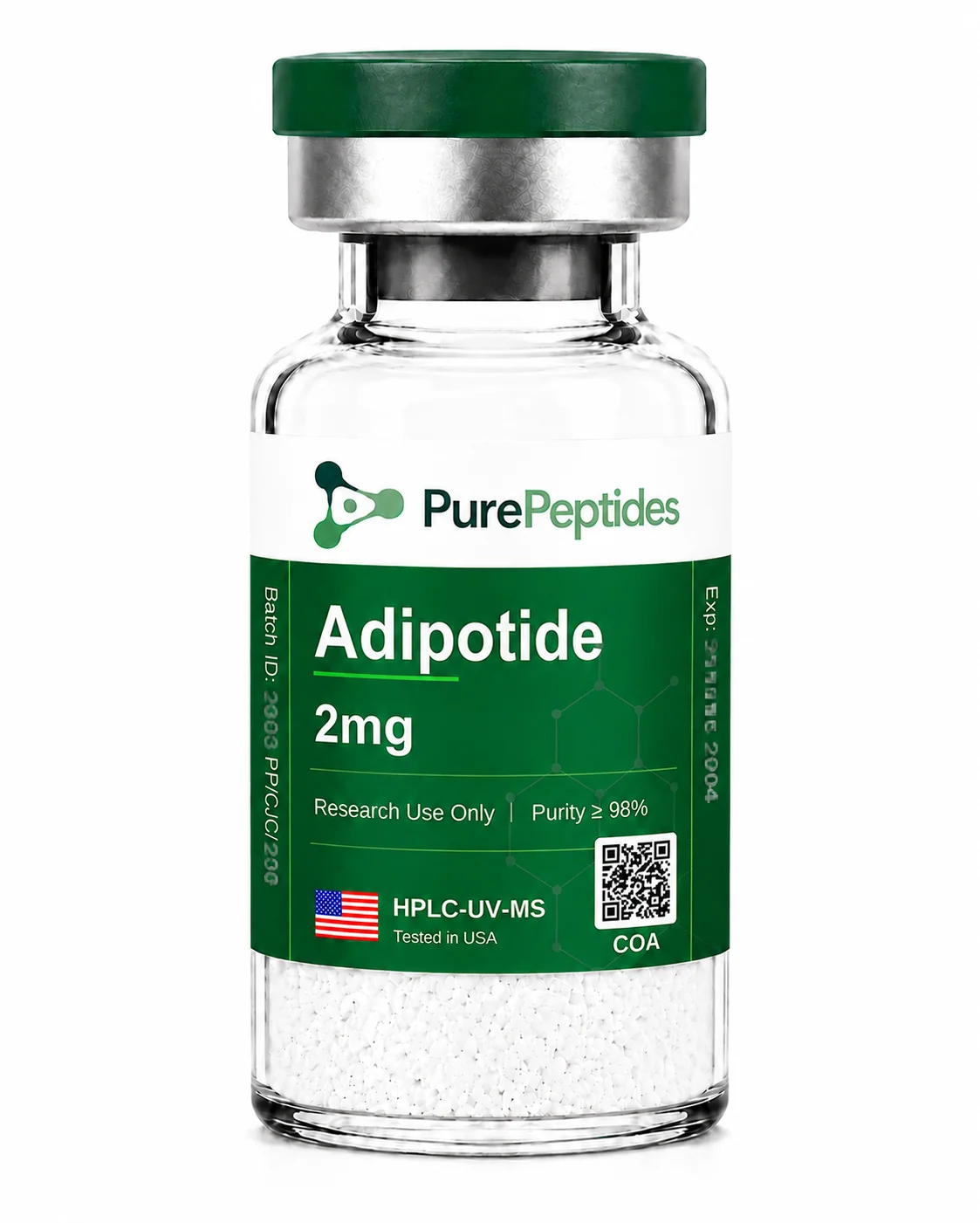
Adipotide
$47.00
Supplied as a lyophilised powder and independently verified to ≥98% purity by HPLC and MS-UPLC analysis.
1000 in stock
🔥 Exclusive Crypto Offer
Get an INSTANT 15% DISCOUNT when you pay with Bitcoin, Ethereum, Dogecoin, Bitcoin Cash, XRP, Solana, or USDT.
⚡ Don't have crypto? Buy it here in 5 minutes with easy guidance.
💡 Pro Tip: You can also pay with cryptocurrency using your verified Cash App or PayPal account for a fast and secure checkout!
What is Adipotide?
Adipotide is a synthetic peptide with two joined parts: one that homes to the blood vessels feeding fat tissue, and one that triggers cell death in those vessel cells. It has been studied in animal research for its effects on fat tissue and body composition.
- A two-part peptide that homes to the blood supply of fat tissue and triggers cell death there
- Studied in animal research for its effects on fat tissue
- Works directly on fat-tissue blood vessels rather than through hormones or metabolism
- Primate studies looked at body-composition measures and fat-tissue volume
For research use only. Not approved for human therapeutic use.
Adipotide, also known as FTPP (Fat-Targeted Proapoptotic Peptide) and Prohibitin-TP01 (CAS 859216-15-2), is a synthetic peptidomimetic compound with a molecular weight of 2555.22 g/mol. Defined by the chimeric sequence CKGGRAKDC-GG-D(KLAKLAK)2, Adipotide consists of a nine-amino acid targeting motif (CKGGRAKDC) linked via a glycine-glycine spacer to a D-enantiomer proapoptotic peptide sequence. The targeting motif was identified through phage display screening and is associated with binding to prohibitin and annexin A2 (ANXA2). Produced via solid-phase peptide synthesis.
Adipotide has been studied for its chimeric design strategy, which couples a vascular targeting motif to a mitochondrial membrane-disrupting sequence. The CKGGRAKDC domain has been identified in phage display screens as binding to prohibitin and ANXA2, membrane proteins documented in published studies as expressed on the endothelial cells of white adipose tissue vasculature, a tissue-selective expression pattern that has been characterised as the molecular basis of the compound’s ligand-directed targeting approach in adipose vascular biology research. In vitro studies have examined the interaction between the CKGGRAKDC targeting motif and white adipose tissue vasculature-associated endothelial cell populations, documenting the phage display-identified peptide’s selective homing to WAT endothelium and characterising prohibitin and ANXA2 as the receptor basis of this endothelial cell targeting activity [1]. In vivo studies in rodent and non-human primate models have investigated body composition changes, white adipose tissue vascular dynamics, and the selectivity of the targeting domain for adipose-associated vasculature, with studies in obese rhesus macaques documenting that Adipotide administration induced targeted apoptosis within white adipose tissue vasculature and documented changes in body weight and insulin sensitivity parameters under controlled conditions [2], making Adipotide a reference compound in vascular-targeted peptidomimetic research across adipose tissue biology and ligand-directed apoptosis models.
Adipotide is produced to research-grade standards and independently verified by third-party HPLC and MS-UPLC analysis before dispatch. Vials are vacuum sealed and stored in a temperature controlled, monitored cold storage system. Certificates of Analysis are available on request.
Sold strictly for in vitro research purposes only. Not for human consumption. Intended for use by qualified researchers in laboratory settings only.
References
1Kolonin MG, Saha PK, Chan L, Pasqualini R, Arap W. Reversal of obesity by targeted ablation of adipose tissue. Nat Med. 2004 Jun;10(6):625–32. .PubMed PMID: 151335062Barnhart KF, Christianson DR, Hanley PW, Driessen WHP, Bernacky BJ, Baze WB, et al. A peptidomimetic targeting white fat causes weight loss and changes in insulin sensitivity parameters in obese monkeys. Sci Transl Med. 2011 Nov 9;3(108):108ra112. ; PubMed Central PMCID: PMC3666164.PubMed PMID: 22072637
Scientific Review

Dr. Martina Rossi, PhD
Scientific Contributor and Reviewer
Reviewed for scientific accuracy, 14 June 2026
View credentials →
Adipotide, also known as FTPP (Fat-Targeted Proapoptotic Peptide) and Prohibitin-TP01 (CAS 859216-15-2), is a synthetic peptidomimetic compound with a molecular weight of 2555.22 g/mol. Defined by the chimeric sequence CKGGRAKDC-GG-D(KLAKLAK)2, Adipotide consists of a nine-amino acid targeting motif (CKGGRAKDC) linked via a glycine-glycine spacer to a D-enantiomer proapoptotic peptide sequence. The targeting motif was identified through phage display screening and is associated with binding to prohibitin and annexin A2 (ANXA2). Produced via solid-phase peptide synthesis.
Adipotide has been studied for its chimeric design strategy, which couples a vascular targeting motif to a mitochondrial membrane-disrupting sequence. The CKGGRAKDC domain has been identified in phage display screens as binding to prohibitin and ANXA2, membrane proteins documented in published studies as expressed on the endothelial cells of white adipose tissue vasculature, a tissue-selective expression pattern that has been characterised as the molecular basis of the compound’s ligand-directed targeting approach in adipose vascular biology research. In vitro studies have examined the interaction between the CKGGRAKDC targeting motif and white adipose tissue vasculature-associated endothelial cell populations, documenting the phage display-identified peptide’s selective homing to WAT endothelium and characterising prohibitin and ANXA2 as the receptor basis of this endothelial cell targeting activity [1]. In vivo studies in rodent and non-human primate models have investigated body composition changes, white adipose tissue vascular dynamics, and the selectivity of the targeting domain for adipose-associated vasculature, with studies in obese rhesus macaques documenting that Adipotide administration induced targeted apoptosis within white adipose tissue vasculature and documented changes in body weight and insulin sensitivity parameters under controlled conditions [2], making Adipotide a reference compound in vascular-targeted peptidomimetic research across adipose tissue biology and ligand-directed apoptosis models.
Adipotide is produced to research-grade standards and independently verified by third-party HPLC and MS-UPLC analysis before dispatch. Vials are vacuum sealed and stored in a temperature controlled, monitored cold storage system. Certificates of Analysis are available on request.
Sold strictly for in vitro research purposes only. Not for human consumption. Intended for use by qualified researchers in laboratory settings only.
References
1Kolonin MG, Saha PK, Chan L, Pasqualini R, Arap W. Reversal of obesity by targeted ablation of adipose tissue. Nat Med. 2004 Jun;10(6):625–32. .PubMed PMID: 151335062Barnhart KF, Christianson DR, Hanley PW, Driessen WHP, Bernacky BJ, Baze WB, et al. A peptidomimetic targeting white fat causes weight loss and changes in insulin sensitivity parameters in obese monkeys. Sci Transl Med. 2011 Nov 9;3(108):108ra112. ; PubMed Central PMCID: PMC3666164.PubMed PMID: 22072637
Scientific Review
Dr. Martina Rossi, PhD
Scientific Contributor and Reviewer
Reviewed for scientific accuracy, 14 June 2026
View credentials →CAS NumberN/A (chimeric research peptide)Molecular Weight2,611.41 g/molPurity≥98%Physical FormLyophilised PowderManufacturingManufactured in an ISO9001 Certified LaboratoryTestingHPLC + MS-UPLCSKUADIP
Lyophilised powder: store at -20 °C or below, away from light and moisture. Once reconstituted in an appropriate laboratory diluent (e.g. sterile water, PBS, or assay buffer), store at 2–8 °C and use within the validated period for your protocol. Do not refreeze.
Adipotide, also known as FTPP (Fat-Targeted Proapoptotic Peptide) and Prohibitin-TP01 (CAS 859216-15-2), is a synthetic peptidomimetic compound with a molecular weight of 2555.22 g/mol. Defined by the chimeric sequence CKGGRAKDC-GG-D(KLAKLAK)2, Adipotide consists of a nine-amino acid targeting motif (CKGGRAKDC) linked via a glycine-glycine spacer to a D-enantiomer proapoptotic peptide sequence. The targeting motif was identified through phage display screening and is associated with binding to prohibitin and annexin A2 (ANXA2). Produced via solid-phase peptide synthesis.
Adipotide has been studied for its chimeric design strategy, which couples a vascular targeting motif to a mitochondrial membrane-disrupting sequence. The CKGGRAKDC domain has been identified in phage display screens as binding to prohibitin and ANXA2, membrane proteins documented in published studies as expressed on the endothelial cells of white adipose tissue vasculature, a tissue-selective expression pattern that has been characterised as the molecular basis of the compound’s ligand-directed targeting approach in adipose vascular biology research. In vitro studies have examined the interaction between the CKGGRAKDC targeting motif and white adipose tissue vasculature-associated endothelial cell populations, documenting the phage display-identified peptide’s selective homing to WAT endothelium and characterising prohibitin and ANXA2 as the receptor basis of this endothelial cell targeting activity [1]. In vivo studies in rodent and non-human primate models have investigated body composition changes, white adipose tissue vascular dynamics, and the selectivity of the targeting domain for adipose-associated vasculature, with studies in obese rhesus macaques documenting that Adipotide administration induced targeted apoptosis within white adipose tissue vasculature and documented changes in body weight and insulin sensitivity parameters under controlled conditions [2], making Adipotide a reference compound in vascular-targeted peptidomimetic research across adipose tissue biology and ligand-directed apoptosis models.
Adipotide is produced to research-grade standards and independently verified by third-party HPLC and MS-UPLC analysis before dispatch. Vials are vacuum sealed and stored in a temperature controlled, monitored cold storage system. Certificates of Analysis are available on request.
Sold strictly for in vitro research purposes only. Not for human consumption. Intended for use by qualified researchers in laboratory settings only.
References
1Kolonin MG, Saha PK, Chan L, Pasqualini R, Arap W. Reversal of obesity by targeted ablation of adipose tissue. Nat Med. 2004 Jun;10(6):625–32. .PubMed PMID: 151335062Barnhart KF, Christianson DR, Hanley PW, Driessen WHP, Bernacky BJ, Baze WB, et al. A peptidomimetic targeting white fat causes weight loss and changes in insulin sensitivity parameters in obese monkeys. Sci Transl Med. 2011 Nov 9;3(108):108ra112. ; PubMed Central PMCID: PMC3666164.PubMed PMID: 22072637
Scientific Review
Dr. Martina Rossi, PhD
Scientific Contributor and Reviewer
Reviewed for scientific accuracy, 14 June 2026
View credentials →CAS NumberN/A (chimeric research peptide)Molecular Weight2,611.41 g/molPurity≥98%Physical FormLyophilised PowderManufacturingManufactured in an ISO9001 Certified LaboratoryTestingHPLC + MS-UPLCSKUADIP
Lyophilised powder: store at -20 °C or below, away from light and moisture. Once reconstituted in an appropriate laboratory diluent (e.g. sterile water, PBS, or assay buffer), store at 2–8 °C and use within the validated period for your protocol. Do not refreeze.
Related products
Regeneration Research
Regeneration Research

Regeneration Research
Regeneration Research
Regeneration Research
Regeneration Research
Regeneration Research

Regeneration Research