
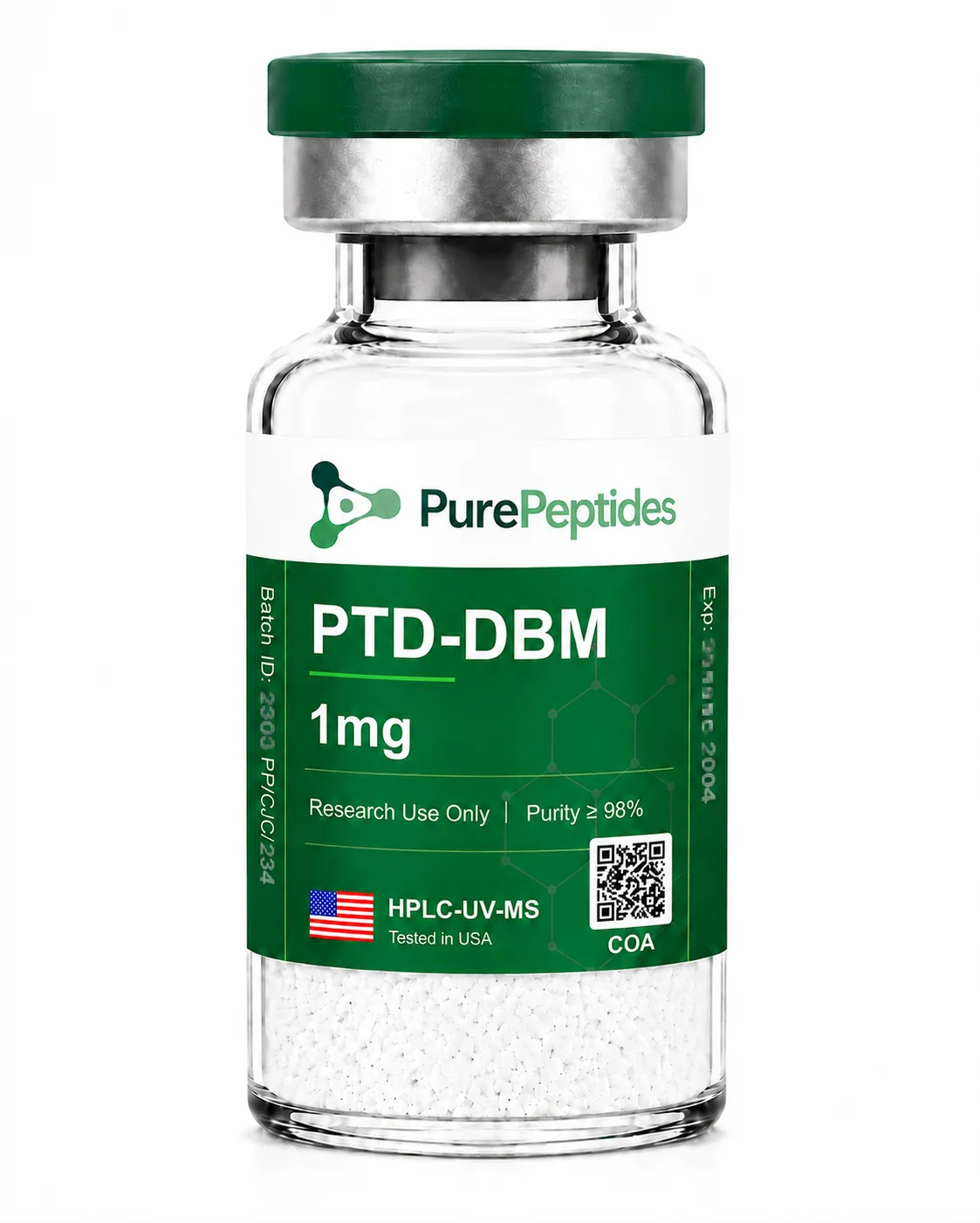
PTD-DBM
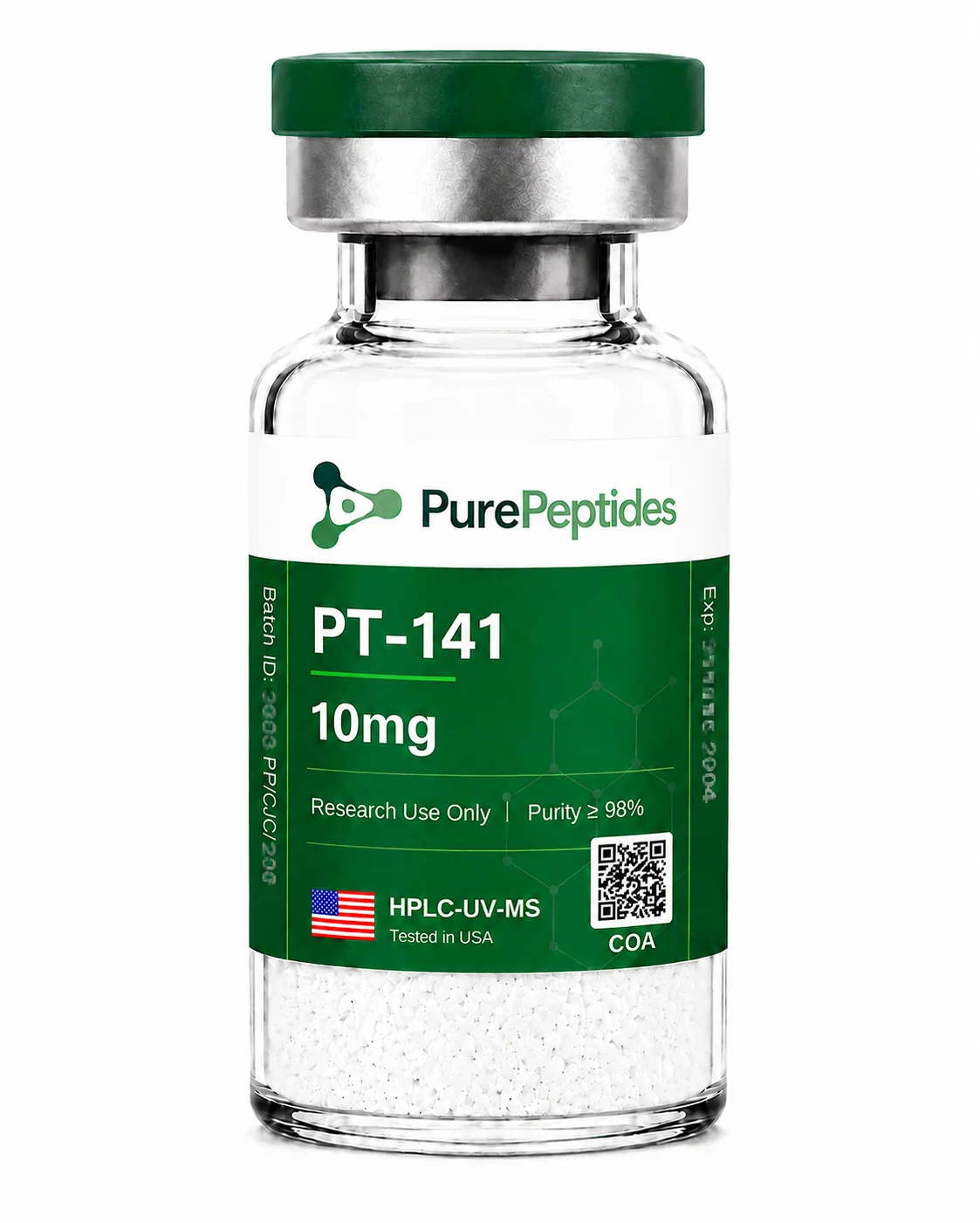
$57.00
Supplied as a lyophilised powder and independently verified to ≥98% purity by HPLC and MS-UPLC analysis.
1000 in stock
🔥 Exclusive Crypto Offer
Get an INSTANT 15% DISCOUNT when you pay with Bitcoin, Ethereum, Dogecoin, Bitcoin Cash, XRP, Solana, or USDT.
⚡ Don't have crypto? Buy it here in 5 minutes with easy guidance.
💡 Pro Tip: You can also pay with cryptocurrency using your verified Cash App or PayPal account for a fast and secure checkout!
What is PTD-DBM?
PTD-DBM is a cell-entering peptide that switches on the Wnt signaling pathway by blocking two proteins (Dishevelled and CXXC5) that normally hold it back. It is studied in animal research for its effects on hair-follicle growth.
- A cell-entering peptide that blocks the Dvl-CXXC5 brake on the Wnt pathway
- Studied for its effects on Wnt signaling in hair-follicle research models
- Animal studies looked at new hair-follicle growth after it was applied to the skin
- Used as a research tool for Wnt-pathway control of hair-follicle development
For research use only. Not approved for human therapeutic use.
PTD-DBM (Protein Transduction Domain – Dishevelled Binding Motif) is a synthetic chimeric cell-penetrating peptide with a molecular weight of 3082.64 g/mol. Its structure consists of a cell-penetrating protein transduction domain (PTD) fused to a Dishevelled (Dvl) binding motif derived from CXXC5, an intracellular negative-feedback regulator of the Wnt/β-catenin signalling pathway. The PTD component enables the peptide to traverse cell membranes without requiring receptor-mediated endocytosis, while the Dvl-binding motif provides the functional interaction domain that competes with endogenous CXXC5 for binding to Dishevelled. Produced via solid-phase peptide synthesis, PTD-DBM is associated with Wnt/β-catenin pathway modulation.PTD-DBM has been investigated as a tool compound for releasing the CXXC5-mediated negative-feedback brake on Wnt/β-catenin signalling. CXXC5 acts as a negative-feedback regulator of the Wnt/β-catenin pathway by binding to the Dishevelled protein, and PTD-DBM was designed to disrupt this CXXC5–Dishevelled interaction, thereby de-repressing pathway activity. Published studies have documented that PTD-DBM competitively blocks the CXXC5–Dishevelled interaction, stabilising β-catenin and activating Wnt/β-catenin target-gene signalling, and that topical application of the peptide accelerated cutaneous wound healing [1]. Further in vivo work has documented that disrupting the CXXC5–Dishevelled interaction with the competitor peptide activated the Wnt/β-catenin pathway and accelerated hair regrowth and wound-induced hair follicle neogenesis in mouse models, with co-administration of the GSK-3β inhibitor valproic acid further increasing the hair-regrowth response [2], making PTD-DBM a reference compound in preclinical research examining CXXC5–Dishevelled-directed activation of Wnt/β-catenin signalling in skin wound-healing and hair-follicle regeneration models.PTD-DBM is produced to research-grade standards and independently verified by third-party HPLC and MS-UPLC analysis before dispatch. Vials are vacuum sealed and stored in a temperature controlled, monitored cold storage system. Certificates of Analysis are available on request.Sold strictly for in vitro research purposes only. Not for human consumption. Intended for use by qualified researchers in laboratory settings only.
References
1Lee SH, Kim MY, Kim HY, Lee YM, Kim H, Nam KA, et al. The Dishevelled-binding protein CXXC5 negatively regulates cutaneous wound healing. J Exp Med. 2015 Jun 29;212(7):1061–80. ; PubMed Central PMCID: PMC4493411.PubMed PMID: 260562332Lee SH, Seo SH, Lee DH, Pi LQ, Lee WS, Choi KY. Targeting of CXXC5 by a Competing Peptide Stimulates Hair Regrowth and Wound-Induced Hair Neogenesis. J Invest Dermatol. 2017 Nov;137(11):2260–9. .PubMed PMID: 28595998
Scientific Review

Dr. Martina Rossi, PhD
Scientific Contributor and Reviewer
Reviewed for scientific accuracy, 14 June 2026
View credentials →
PTD-DBM (Protein Transduction Domain – Dishevelled Binding Motif) is a synthetic chimeric cell-penetrating peptide with a molecular weight of 3082.64 g/mol. Its structure consists of a cell-penetrating protein transduction domain (PTD) fused to a Dishevelled (Dvl) binding motif derived from CXXC5, an intracellular negative-feedback regulator of the Wnt/β-catenin signalling pathway. The PTD component enables the peptide to traverse cell membranes without requiring receptor-mediated endocytosis, while the Dvl-binding motif provides the functional interaction domain that competes with endogenous CXXC5 for binding to Dishevelled. Produced via solid-phase peptide synthesis, PTD-DBM is associated with Wnt/β-catenin pathway modulation.PTD-DBM has been investigated as a tool compound for releasing the CXXC5-mediated negative-feedback brake on Wnt/β-catenin signalling. CXXC5 acts as a negative-feedback regulator of the Wnt/β-catenin pathway by binding to the Dishevelled protein, and PTD-DBM was designed to disrupt this CXXC5–Dishevelled interaction, thereby de-repressing pathway activity. Published studies have documented that PTD-DBM competitively blocks the CXXC5–Dishevelled interaction, stabilising β-catenin and activating Wnt/β-catenin target-gene signalling, and that topical application of the peptide accelerated cutaneous wound healing [1]. Further in vivo work has documented that disrupting the CXXC5–Dishevelled interaction with the competitor peptide activated the Wnt/β-catenin pathway and accelerated hair regrowth and wound-induced hair follicle neogenesis in mouse models, with co-administration of the GSK-3β inhibitor valproic acid further increasing the hair-regrowth response [2], making PTD-DBM a reference compound in preclinical research examining CXXC5–Dishevelled-directed activation of Wnt/β-catenin signalling in skin wound-healing and hair-follicle regeneration models.PTD-DBM is produced to research-grade standards and independently verified by third-party HPLC and MS-UPLC analysis before dispatch. Vials are vacuum sealed and stored in a temperature controlled, monitored cold storage system. Certificates of Analysis are available on request.Sold strictly for in vitro research purposes only. Not for human consumption. Intended for use by qualified researchers in laboratory settings only.
References
1Lee SH, Kim MY, Kim HY, Lee YM, Kim H, Nam KA, et al. The Dishevelled-binding protein CXXC5 negatively regulates cutaneous wound healing. J Exp Med. 2015 Jun 29;212(7):1061–80. ; PubMed Central PMCID: PMC4493411.PubMed PMID: 260562332Lee SH, Seo SH, Lee DH, Pi LQ, Lee WS, Choi KY. Targeting of CXXC5 by a Competing Peptide Stimulates Hair Regrowth and Wound-Induced Hair Neogenesis. J Invest Dermatol. 2017 Nov;137(11):2260–9. .PubMed PMID: 28595998
Scientific Review
Dr. Martina Rossi, PhD
Scientific Contributor and Reviewer
Reviewed for scientific accuracy, 14 June 2026
View credentials →CAS NumberN/A (chimeric research peptide)Molecular WeightVariable — see CoAPurity≥98%Physical FormLyophilised PowderManufacturingManufactured in an ISO9001 Certified LaboratoryTestingHPLC + MS-UPLCSKURSC-PTDDBM-9293
Lyophilised powder: store at -20 °C or below, away from light and moisture. Once reconstituted in an appropriate laboratory diluent (e.g. sterile water, PBS, or assay buffer), store at 2–8 °C and use within the validated period for your protocol. Do not refreeze.
PTD-DBM (Protein Transduction Domain – Dishevelled Binding Motif) is a synthetic chimeric cell-penetrating peptide with a molecular weight of 3082.64 g/mol. Its structure consists of a cell-penetrating protein transduction domain (PTD) fused to a Dishevelled (Dvl) binding motif derived from CXXC5, an intracellular negative-feedback regulator of the Wnt/β-catenin signalling pathway. The PTD component enables the peptide to traverse cell membranes without requiring receptor-mediated endocytosis, while the Dvl-binding motif provides the functional interaction domain that competes with endogenous CXXC5 for binding to Dishevelled. Produced via solid-phase peptide synthesis, PTD-DBM is associated with Wnt/β-catenin pathway modulation.PTD-DBM has been investigated as a tool compound for releasing the CXXC5-mediated negative-feedback brake on Wnt/β-catenin signalling. CXXC5 acts as a negative-feedback regulator of the Wnt/β-catenin pathway by binding to the Dishevelled protein, and PTD-DBM was designed to disrupt this CXXC5–Dishevelled interaction, thereby de-repressing pathway activity. Published studies have documented that PTD-DBM competitively blocks the CXXC5–Dishevelled interaction, stabilising β-catenin and activating Wnt/β-catenin target-gene signalling, and that topical application of the peptide accelerated cutaneous wound healing [1]. Further in vivo work has documented that disrupting the CXXC5–Dishevelled interaction with the competitor peptide activated the Wnt/β-catenin pathway and accelerated hair regrowth and wound-induced hair follicle neogenesis in mouse models, with co-administration of the GSK-3β inhibitor valproic acid further increasing the hair-regrowth response [2], making PTD-DBM a reference compound in preclinical research examining CXXC5–Dishevelled-directed activation of Wnt/β-catenin signalling in skin wound-healing and hair-follicle regeneration models.PTD-DBM is produced to research-grade standards and independently verified by third-party HPLC and MS-UPLC analysis before dispatch. Vials are vacuum sealed and stored in a temperature controlled, monitored cold storage system. Certificates of Analysis are available on request.Sold strictly for in vitro research purposes only. Not for human consumption. Intended for use by qualified researchers in laboratory settings only.
References
1Lee SH, Kim MY, Kim HY, Lee YM, Kim H, Nam KA, et al. The Dishevelled-binding protein CXXC5 negatively regulates cutaneous wound healing. J Exp Med. 2015 Jun 29;212(7):1061–80. ; PubMed Central PMCID: PMC4493411.PubMed PMID: 260562332Lee SH, Seo SH, Lee DH, Pi LQ, Lee WS, Choi KY. Targeting of CXXC5 by a Competing Peptide Stimulates Hair Regrowth and Wound-Induced Hair Neogenesis. J Invest Dermatol. 2017 Nov;137(11):2260–9. .PubMed PMID: 28595998
Scientific Review
Dr. Martina Rossi, PhD
Scientific Contributor and Reviewer
Reviewed for scientific accuracy, 14 June 2026
View credentials →CAS NumberN/A (chimeric research peptide)Molecular WeightVariable — see CoAPurity≥98%Physical FormLyophilised PowderManufacturingManufactured in an ISO9001 Certified LaboratoryTestingHPLC + MS-UPLCSKURSC-PTDDBM-9293
Lyophilised powder: store at -20 °C or below, away from light and moisture. Once reconstituted in an appropriate laboratory diluent (e.g. sterile water, PBS, or assay buffer), store at 2–8 °C and use within the validated period for your protocol. Do not refreeze.
Related products
Regeneration Research

Regeneration Research

Regeneration Research

Regeneration Research
Regeneration Research
Regeneration Research

Regeneration Research
Regeneration Research