
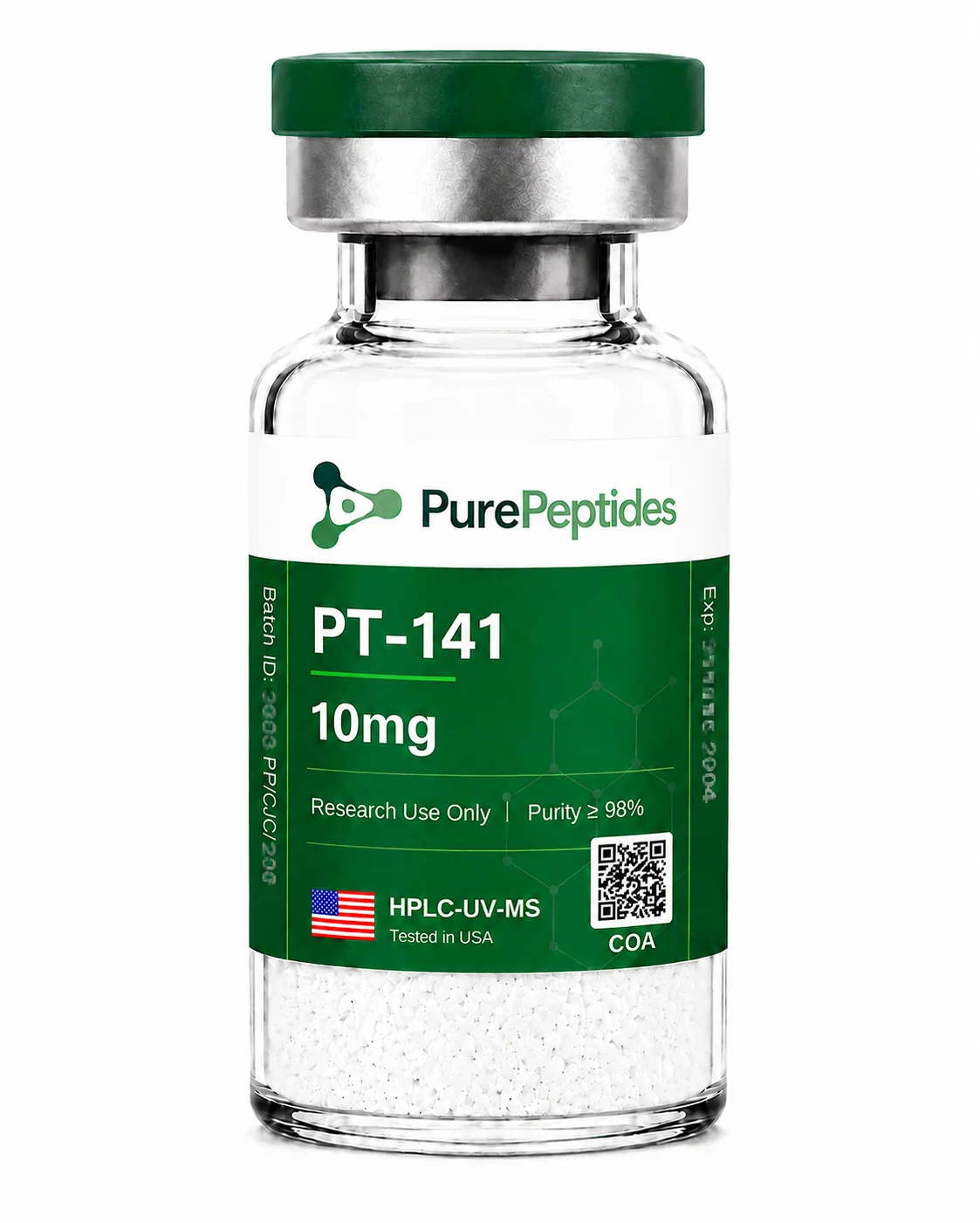
PT-141 (Bremelanotide)
$57.00
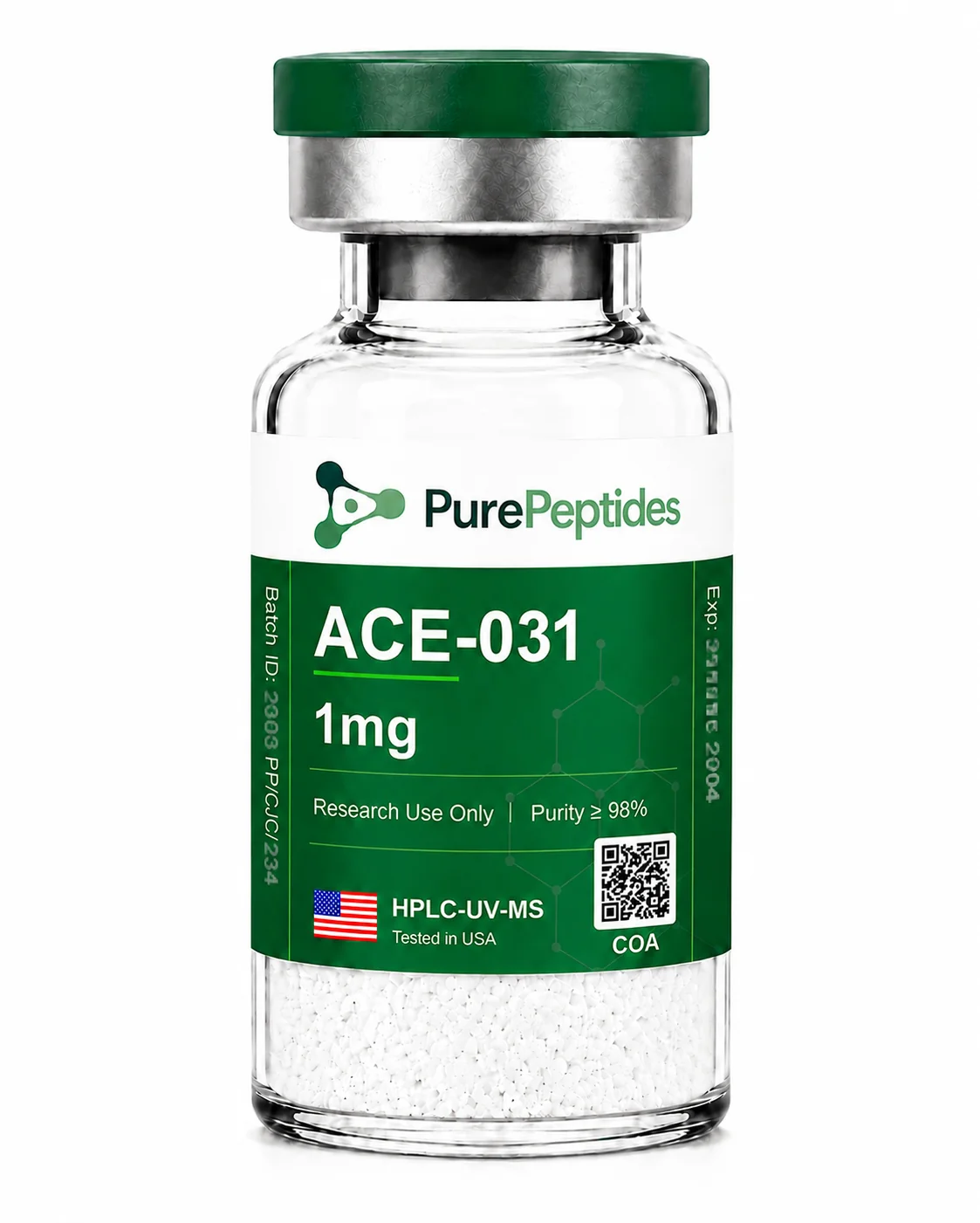
Supplied as a lyophilised powder and independently verified to ≥98% purity by HPLC and MS-UPLC analysis.
1000 in stock
🔥 Exclusive Crypto Offer
Get an INSTANT 15% DISCOUNT when you pay with Bitcoin, Ethereum, Dogecoin, Bitcoin Cash, XRP, Solana, or USDT.
⚡ Don't have crypto? Buy it here in 5 minutes with easy guidance.
💡 Pro Tip: You can also pay with cryptocurrency using your verified Cash App or PayPal account for a fast and secure checkout!
What is PT-141 (Bremelanotide)?
PT-141 (bremelanotide) is a synthetic ring-shaped seven-amino-acid peptide derived from Melanotan II. It acts on melanocortin receptors in the brain (mainly MC3R and MC4R) and is studied in research as a tool for melanocortin-receptor and brain signaling.
- A ring-shaped peptide derived from Melanotan II, shifted toward MC3R and MC4R activity
- Acts on brain melanocortin receptors, studied for downstream brain-circuit signaling
- Studied in receptor research for its melanocortin-receptor selectivity
- Used to study binding and signaling in melanocortin-receptor assays
For research use only. Not approved for human therapeutic use.
PT-141 (CAS 189691-06-3), also known as Bremelanotide, is a synthetic cyclic heptapeptide melanocortin receptor agonist with a molecular weight of 1025.22 g/mol. Its structure, Ac-Nle-cyclo[Asp-His-D-Phe-Arg-Trp-Lys]-OH, features an N-terminal acetylated norleucine residue and a lactam bridge between Asp and Lys forming the characteristic macrocyclic ring. PT-141 was derived from the linear alpha-MSH analogue Melanotan II through selective C-terminal modification and retains the His-D-Phe-Arg-Trp pharmacophore core. Produced via solid-phase peptide synthesis, Bremelanotide is primarily associated with melanocortin-3 receptor (MC3R) and melanocortin-4 receptor (MC4R) signalling pathways.
PT-141 has been investigated in preclinical melanocortin receptor pharmacology, where its cyclic structure and receptor selectivity profile have been characterised as the pharmacological basis for its use in studying MC3R and MC4R-mediated central signalling. Unlike the endogenous melanocortin ligands alpha-MSH and ACTH, PT-141 incorporates non-natural amino acid substitutions including norleucine and D-phenylalanine that have been characterised as altering its receptor binding characteristics and metabolic stability. In vitro receptor pharmacology studies have examined Bremelanotide’s binding affinity across the melanocortin receptor family (MC1R–MC5R), characterising its Gαs-coupled cAMP signalling profile and receptor subtype selectivity, documenting MC3R and MC4R as the primary receptor targets underlying PT-141’s central melanocortinergic pharmacological activity [1]. In vivo rodent studies have investigated central MC3R/MC4R activation within hypothalamic melanocortinergic circuitry, documenting that central administration of Melanotan II in rodent models activates hypothalamic MC4R-mediated signalling pathways and characterising central melanocortinergic circuit engagement as a defined in vivo pharmacological consequence of cyclic melanocortin receptor agonism [2], making PT-141 a key reference compound in melanocortin receptor pharmacology research examining MC3R and MC4R-selective cyclic agonist activity in central signalling contexts.
PT-141 is produced to research-grade standards and independently verified by third-party HPLC and MS-UPLC analysis before dispatch. Vials are vacuum sealed and stored in a temperature controlled, monitored cold storage system. Certificates of Analysis are available on request.
Sold strictly for in vitro research purposes only. Not for human consumption. Intended for use by qualified researchers in laboratory settings only.
References
1Molinoff PB, Shadiack AM, Earle D, Diamond LE, Quon CY. PT-141: a melanocortin agonist for the treatment of sexual dysfunction. Ann N Y Acad Sci. 2003 Jun;994:96–102. .PubMed PMID: 128513032Fan W, Boston BA, Kesterson RA, Hruby VJ, Cone RD. Role of melanocortinergic neurons in feeding and the agouti obesity syndrome. Nature. 1997 Jan 9;385(6612):165–8. .PubMed PMID: 8990120
Scientific Review

Dr. Martina Rossi, PhD
Scientific Contributor and Reviewer
Reviewed for scientific accuracy, 14 June 2026
View credentials →
PT-141 (CAS 189691-06-3), also known as Bremelanotide, is a synthetic cyclic heptapeptide melanocortin receptor agonist with a molecular weight of 1025.22 g/mol. Its structure, Ac-Nle-cyclo[Asp-His-D-Phe-Arg-Trp-Lys]-OH, features an N-terminal acetylated norleucine residue and a lactam bridge between Asp and Lys forming the characteristic macrocyclic ring. PT-141 was derived from the linear alpha-MSH analogue Melanotan II through selective C-terminal modification and retains the His-D-Phe-Arg-Trp pharmacophore core. Produced via solid-phase peptide synthesis, Bremelanotide is primarily associated with melanocortin-3 receptor (MC3R) and melanocortin-4 receptor (MC4R) signalling pathways.
PT-141 has been investigated in preclinical melanocortin receptor pharmacology, where its cyclic structure and receptor selectivity profile have been characterised as the pharmacological basis for its use in studying MC3R and MC4R-mediated central signalling. Unlike the endogenous melanocortin ligands alpha-MSH and ACTH, PT-141 incorporates non-natural amino acid substitutions including norleucine and D-phenylalanine that have been characterised as altering its receptor binding characteristics and metabolic stability. In vitro receptor pharmacology studies have examined Bremelanotide’s binding affinity across the melanocortin receptor family (MC1R–MC5R), characterising its Gαs-coupled cAMP signalling profile and receptor subtype selectivity, documenting MC3R and MC4R as the primary receptor targets underlying PT-141’s central melanocortinergic pharmacological activity [1]. In vivo rodent studies have investigated central MC3R/MC4R activation within hypothalamic melanocortinergic circuitry, documenting that central administration of Melanotan II in rodent models activates hypothalamic MC4R-mediated signalling pathways and characterising central melanocortinergic circuit engagement as a defined in vivo pharmacological consequence of cyclic melanocortin receptor agonism [2], making PT-141 a key reference compound in melanocortin receptor pharmacology research examining MC3R and MC4R-selective cyclic agonist activity in central signalling contexts.
PT-141 is produced to research-grade standards and independently verified by third-party HPLC and MS-UPLC analysis before dispatch. Vials are vacuum sealed and stored in a temperature controlled, monitored cold storage system. Certificates of Analysis are available on request.
Sold strictly for in vitro research purposes only. Not for human consumption. Intended for use by qualified researchers in laboratory settings only.
References
1Molinoff PB, Shadiack AM, Earle D, Diamond LE, Quon CY. PT-141: a melanocortin agonist for the treatment of sexual dysfunction. Ann N Y Acad Sci. 2003 Jun;994:96–102. .PubMed PMID: 128513032Fan W, Boston BA, Kesterson RA, Hruby VJ, Cone RD. Role of melanocortinergic neurons in feeding and the agouti obesity syndrome. Nature. 1997 Jan 9;385(6612):165–8. .PubMed PMID: 8990120
Scientific Review
Dr. Martina Rossi, PhD
Scientific Contributor and Reviewer
Reviewed for scientific accuracy, 14 June 2026
View credentials →CAS Number189691-06-3Molecular Weight1,025.17 g/molPurity≥98%Physical FormLyophilised PowderManufacturingManufactured in an ISO9001 Certified LaboratoryTestingHPLC + MS-UPLCSKUPT141
Lyophilised powder: store at -20 °C or below, away from light and moisture. Once reconstituted in an appropriate laboratory diluent (e.g. sterile water, PBS, or assay buffer), store at 2–8 °C and use within the validated period for your protocol. Do not refreeze.
PT-141 (CAS 189691-06-3), also known as Bremelanotide, is a synthetic cyclic heptapeptide melanocortin receptor agonist with a molecular weight of 1025.22 g/mol. Its structure, Ac-Nle-cyclo[Asp-His-D-Phe-Arg-Trp-Lys]-OH, features an N-terminal acetylated norleucine residue and a lactam bridge between Asp and Lys forming the characteristic macrocyclic ring. PT-141 was derived from the linear alpha-MSH analogue Melanotan II through selective C-terminal modification and retains the His-D-Phe-Arg-Trp pharmacophore core. Produced via solid-phase peptide synthesis, Bremelanotide is primarily associated with melanocortin-3 receptor (MC3R) and melanocortin-4 receptor (MC4R) signalling pathways.
PT-141 has been investigated in preclinical melanocortin receptor pharmacology, where its cyclic structure and receptor selectivity profile have been characterised as the pharmacological basis for its use in studying MC3R and MC4R-mediated central signalling. Unlike the endogenous melanocortin ligands alpha-MSH and ACTH, PT-141 incorporates non-natural amino acid substitutions including norleucine and D-phenylalanine that have been characterised as altering its receptor binding characteristics and metabolic stability. In vitro receptor pharmacology studies have examined Bremelanotide’s binding affinity across the melanocortin receptor family (MC1R–MC5R), characterising its Gαs-coupled cAMP signalling profile and receptor subtype selectivity, documenting MC3R and MC4R as the primary receptor targets underlying PT-141’s central melanocortinergic pharmacological activity [1]. In vivo rodent studies have investigated central MC3R/MC4R activation within hypothalamic melanocortinergic circuitry, documenting that central administration of Melanotan II in rodent models activates hypothalamic MC4R-mediated signalling pathways and characterising central melanocortinergic circuit engagement as a defined in vivo pharmacological consequence of cyclic melanocortin receptor agonism [2], making PT-141 a key reference compound in melanocortin receptor pharmacology research examining MC3R and MC4R-selective cyclic agonist activity in central signalling contexts.
PT-141 is produced to research-grade standards and independently verified by third-party HPLC and MS-UPLC analysis before dispatch. Vials are vacuum sealed and stored in a temperature controlled, monitored cold storage system. Certificates of Analysis are available on request.
Sold strictly for in vitro research purposes only. Not for human consumption. Intended for use by qualified researchers in laboratory settings only.
References
1Molinoff PB, Shadiack AM, Earle D, Diamond LE, Quon CY. PT-141: a melanocortin agonist for the treatment of sexual dysfunction. Ann N Y Acad Sci. 2003 Jun;994:96–102. .PubMed PMID: 128513032Fan W, Boston BA, Kesterson RA, Hruby VJ, Cone RD. Role of melanocortinergic neurons in feeding and the agouti obesity syndrome. Nature. 1997 Jan 9;385(6612):165–8. .PubMed PMID: 8990120
Scientific Review
Dr. Martina Rossi, PhD
Scientific Contributor and Reviewer
Reviewed for scientific accuracy, 14 June 2026
View credentials →CAS Number189691-06-3Molecular Weight1,025.17 g/molPurity≥98%Physical FormLyophilised PowderManufacturingManufactured in an ISO9001 Certified LaboratoryTestingHPLC + MS-UPLCSKUPT141
Lyophilised powder: store at -20 °C or below, away from light and moisture. Once reconstituted in an appropriate laboratory diluent (e.g. sterile water, PBS, or assay buffer), store at 2–8 °C and use within the validated period for your protocol. Do not refreeze.
Related products
Regeneration Research
Regeneration Research

Regeneration Research
Regeneration Research

Regeneration Research
Regeneration Research
Regeneration Research
Regeneration Research